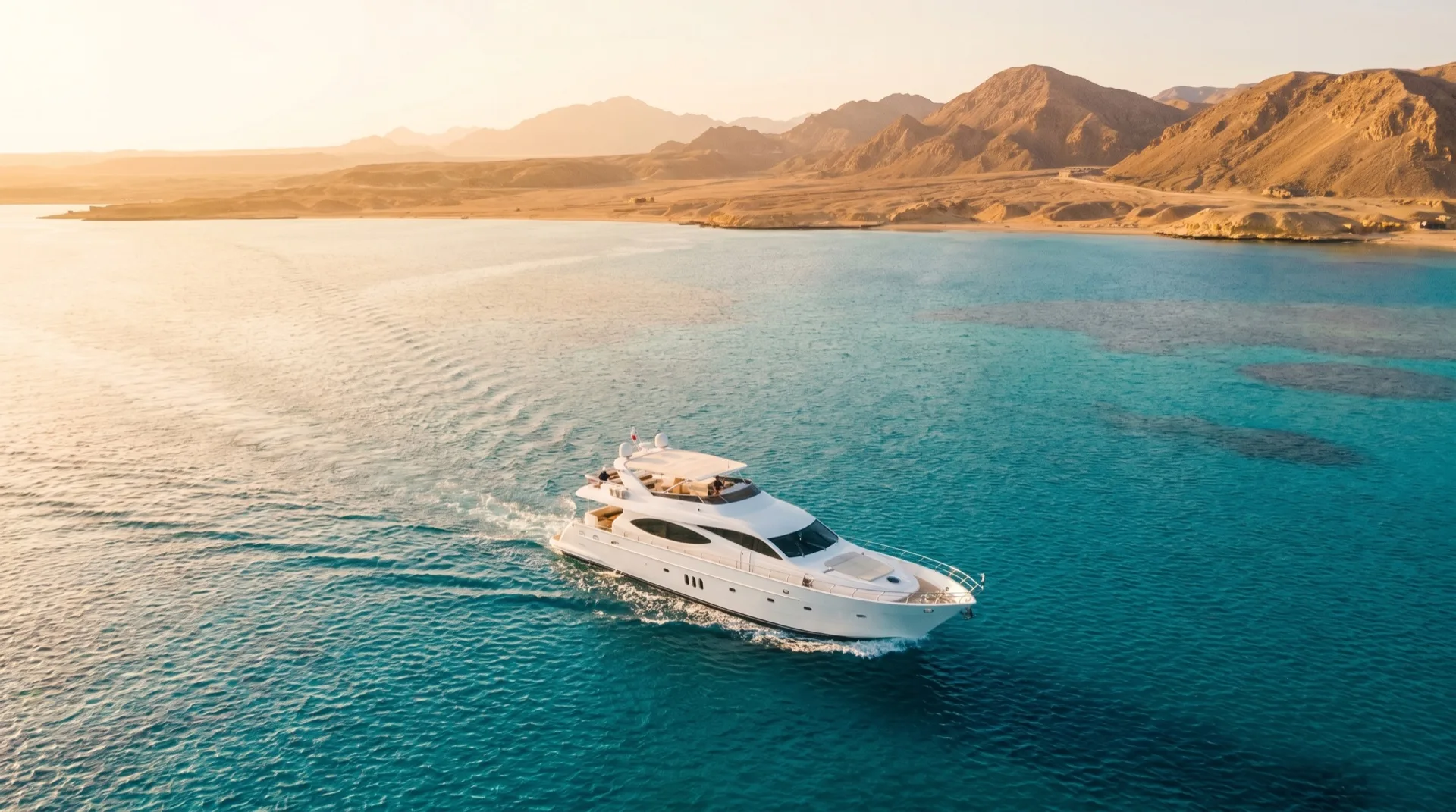
In the Orange Bay vs Paradise Island debate, the honest answer is that the two islands solve different problems. Choose Orange Bay for the wide white sandbank, the glowing shallow lagoon, real restaurants and the polished beach-club day that families and groups love. Choose Paradise Island for a smaller, quieter beach with a genuine house reef a few fins from shore, which makes it the better call for snorkelers and couples. Both sit off Hurghada inside the Giftun reserve, and with a private captain you do not have to choose at all.
The short answer: which island wins?
There is no single winner, because the right island depends on what you want from the day. If your idea of a perfect Red Sea afternoon is walking out into an enormous turquoise lagoon that stays shallow forever, ordering lunch at a table in the shade and taking photographs that look almost unreal, Orange Bay is the stronger choice. If you would rather step off the sand straight onto a living reef, share the water with fewer people and trade some comfort for calm, Paradise Island edges ahead. Most first-time visitors who want the classic Hurghada island postcard pick Orange Bay. Snorkelers and couples who have seen the postcard already tend to prefer Paradise.
Our own default, when guests are undecided, is to build the day around the water they care about most and let the boat do the rest. That is the quiet advantage of going private, and it is the thread running through this whole comparison. For the wider context on both islands and the reserve they belong to, our Giftun Island guide is the companion piece to this one.
Orange Bay vs Paradise Island at a glance
Before the detail, here is the comparison in the fewest words possible. Read the two lines that describe each island, then read the two verdicts at the bottom. If one of them already sounds like your kind of day, trust that instinct.
- Orange Bay: a wide white sandbank and a huge ankle-to-waist turquoise lagoon, at its most photogenic near midday.
- Orange Bay: full facilities, several restaurants and bars, toilets, showers and staged photo spots, and by far the busiest island.
- Paradise Island: a smaller, calmer beach with a real house reef a short swim from the sand, the better choice for snorkelers.
- Paradise Island: limited food and basic facilities, so bring cash and modest expectations, and gain space and quiet in return.
- Best for families and groups: Orange Bay, for the shallow water, the food and the comfort.
- Best for couples and snorkelers: Paradise Island, for the reef and the calm.
The water and the sandbank
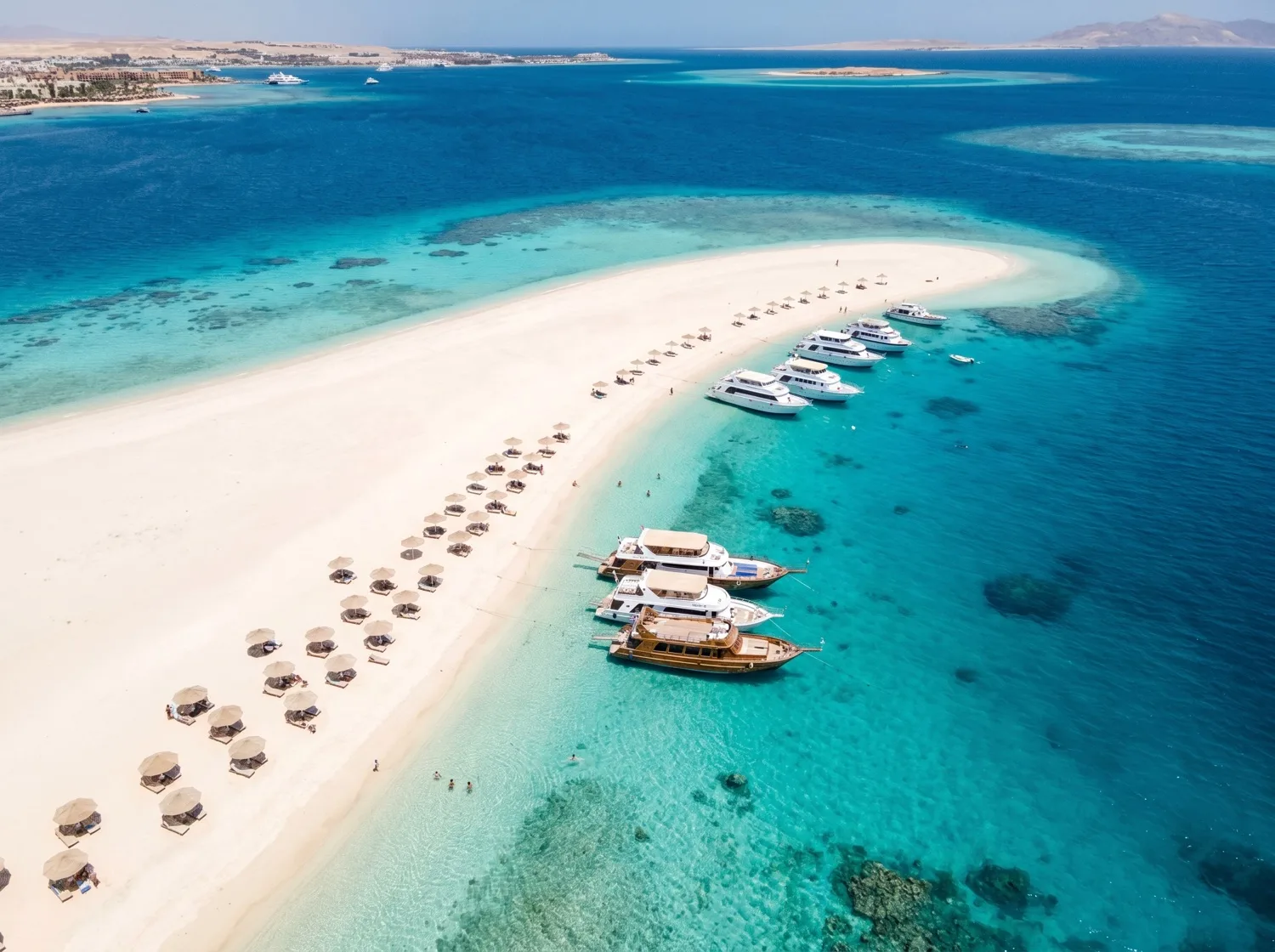
This is where the two islands diverge most clearly. Orange Bay is built around a sandbank, a long tongue of pale sand that runs out into the sea so gently that you can wade a hundred meters and still be at your waist. Between roughly 10am and 2pm, with the sun high overhead, the lagoon turns a saturated turquoise that looks almost synthetic in photographs. The colour is real: it comes from white sand lit through shallow, clear water, not from any filter. On a calm morning the surface is glassy, and the horizon dissolves into three flat bands of colour, sand, shallows and open sea.
Paradise Island reads differently. The beach is smaller and more curved, the water deepens sooner, and the reef edge sits closer to shore. Instead of one endless pale lagoon you get bands of colour: near-white in the shallows, then a darker blue-green where the coral begins. It is less of a walk-out sandbank and more of a proper beach that drops quickly into snorkeling water. Both are beautiful. If the flat, luminous lagoon is the image in your head, that is Orange Bay. If you want colour with a reef under it, that is Paradise.
The beach and the sand underfoot
On Orange Bay the sand is soft, pale and raked, arranged into orderly rows of sun loungers and straw umbrellas that stretch along the developed side of the island. It feels like a beach club that happens to be on an island: comfortable, organised, easy. There is plenty of dry sand to spread out on above the waterline, and the walking is soft underfoot almost everywhere.
Paradise Island is more natural and a little more rugged. There are loungers and umbrellas, but fewer of them, and the edges of the island give way to rockier, reefier ground where you will want reef shoes rather than bare feet. The trade is character for polish. Orange Bay is the manicured option; Paradise keeps more of the raw island feel, with less of it flattened out for comfort.
Pack a pair of reef shoes for either island, but especially for Paradise. The sandbanks are soft, yet the reef edges and entry points can be sharp, and coral is fragile. Shoes protect your feet and the reef in equal measure.
The house reef and snorkeling: which is better for beginners?
For snorkeling straight off the beach, Paradise Island is the better island. Its house reef sits close to the sand, so you can float out a short distance and find coral heads, anthias, parrotfish and the occasional turtle without a boat ride to a separate site. The reef is alive and the visibility is usually excellent, which is why Paradise draws people who care more about what is under the water than what is on it.
Orange Bay is not a poor snorkeling island, but its geography works against shore snorkeling: the huge shallow lagoon that makes the sandbank so photogenic also means the good coral is further out, and most day trips take you to a separate reef stop by boat rather than expecting you to swim to it from the sand. For a nervous first-timer, though, that same shallow lagoon is a gift. It is the calmest, most forgiving water on either island, ideal for finding your confidence with a mask before you try the reef. So the honest answer splits two ways: Paradise has the better reef from the beach, while Orange Bay's shallows are the better place to learn. If snorkeling is the point of the trip, read our guide to the best snorkeling spots in Hurghada before you decide where the boat should stop.
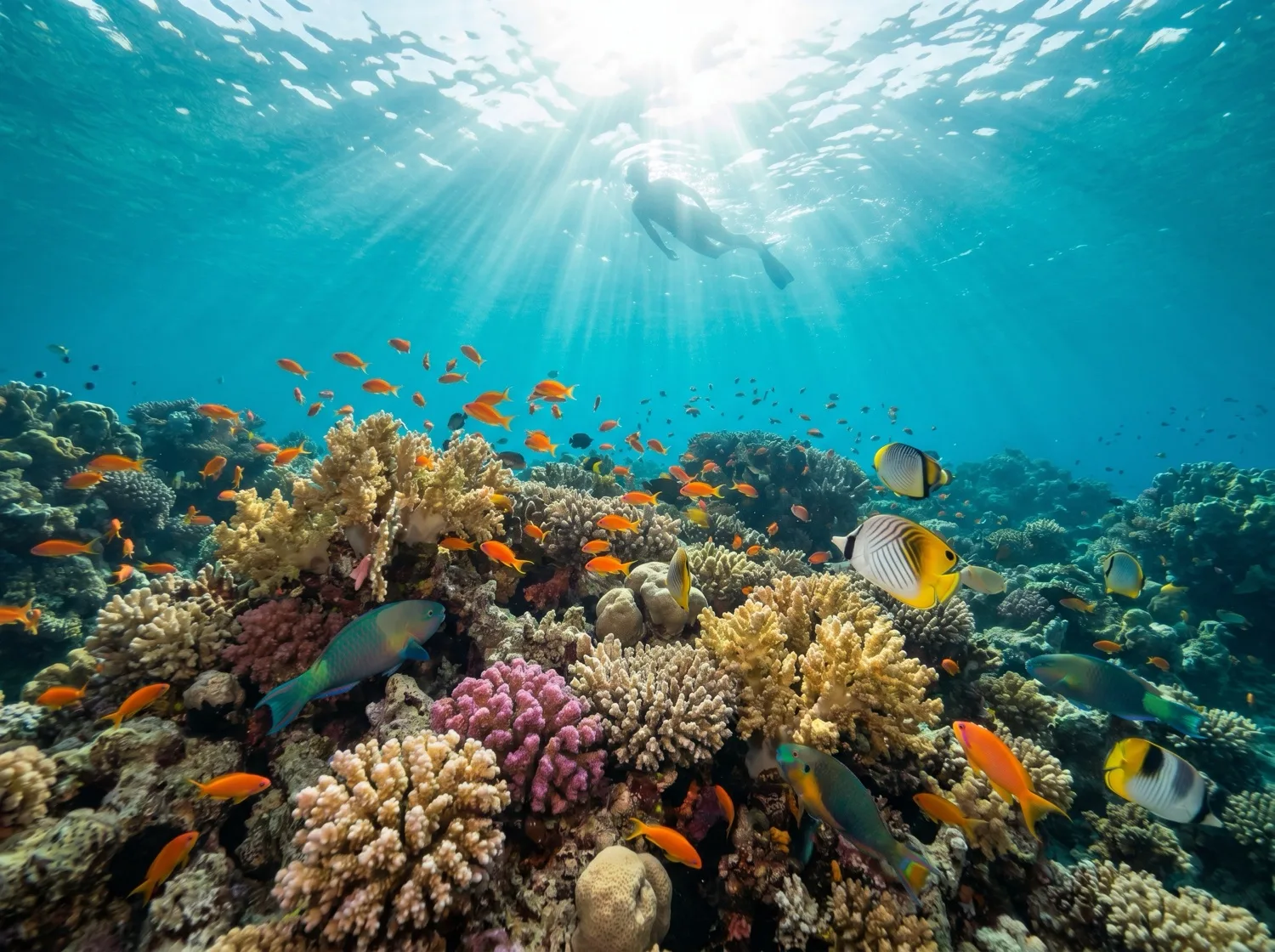
Beginners: start in Orange Bay's shallow lagoon to get comfortable breathing through the snorkel, then let the captain move you to a nearby reef once you have found your rhythm. Confident snorkelers: go straight to Paradise and swim the house reef at your own pace.
Crowds and timing: when each island is at its best
Orange Bay is the most popular island off Hurghada, and it shows. By late morning the big day-boats have unloaded and the sandbank can be genuinely busy, with music from the beach bars and loungers filling up fast. None of that ruins the day, but it does change its character, and it makes the timing of your arrival the single most important decision you will make. Reach the island before the fleet and you get the brightest water, the emptiest sand and the best photographs; arrive at midday with everyone else and you are sharing it.
Paradise Island is quieter by nature. It has less capacity and draws fewer of the largest boats, so even at its busiest it feels calmer than Orange Bay at peak. If crowds are the thing you most want to avoid, Paradise is the safer bet at almost any hour, and an early Orange Bay is the way to get the famous sandbank without the crush. The one rule that applies to both: the earlier you go, the better the day.
Book a boat that leaves the marina by 8:30am. You will reach either island ahead of the day-boat fleet, catch the high-sun turquoise before midday, and have a lounger waiting before the rush. On a private boat you also set the departure, which is the whole point.
Facilities, food and comfort
Comfort is Orange Bay's clearest advantage. The developed side of the island has several restaurants and beach bars, a buffet, clean toilets and showers, shaded seating, and a level of service you would not expect on a sandbank an hour offshore. You can spend a full day there without a cooler bag and want for nothing. Drinks and food are priced for a captive island market rather than a Hurghada cafe, so budget a little more than you would in town, but the convenience is real.
Paradise Island is far more pared back. Expect a basic snack bar or a simple restaurant, toilets, and not much beyond that. It is the kind of place where you bring cash, keep your expectations modest, and treat the lack of infrastructure as part of the appeal. If a comfortable lunch and a cold drink at a table matter to your day, Orange Bay wins this one comfortably. If you would happily trade the buffet for more room to breathe, Paradise is the one.
Photography: the shot each island gives you
Both islands photograph beautifully, but they hand you different pictures. Orange Bay is the more Instagram-ready of the two by design. The developed side has white, Santorini-style buildings, an orange dome, swings set in the shallows, oversized beach chairs and other staged spots built for photos, and the sandbank itself gives you that wide, flat, three-band panorama of sand, turquoise and sky. If your camera roll is part of why you are going, Orange Bay delivers the more obvious, more shareable images.
Paradise Island rewards a different eye. There are no photo props to speak of, but the scenery is more natural: a curved sandbank, bands of reef colour, fewer people in the frame. For an unspoiled, less staged picture, or for underwater and over-the-reef shots, Paradise is the stronger backdrop. One island gives you the postcard; the other gives you the quieter, more honest photograph.
Orange Bay hands you the postcard the moment you step off the boat. Paradise makes you earn the photograph, then rewards you with one no one else on your flight home will have.Field notes · The Solara Journal
Families or couples: who each island suits
For families, Orange Bay is the easier island by a distance. The shallow lagoon is about as safe as open Red Sea water gets, warm and calm and slow to deepen, so small children can paddle for hours within reach. Add proper toilets, food on demand, shade and space for a family to spread out, and it becomes the natural pick for anyone travelling with kids. Our guide to family things to do in Hurghada puts it in the wider context of a trip with children.
For couples, it depends on the couple. If you want the beach-club buzz, the buffet and the photo spots, Orange Bay still works. If you would rather find a quiet stretch of sand, snorkel a reef together and hear the water instead of a beach bar, Paradise Island is the more romantic choice. As a rule of thumb: Orange Bay for lively and comfortable, Paradise for quiet and close to nature.
Getting there and accessibility
Both islands lie off Hurghada in the same stretch of protected sea, and both are reached by boat from the marina. On a fast boat, Orange Bay is very roughly 45 to 60 minutes out; the larger day-boats take longer. Paradise Island sits in the same island group and is a similar distance, so the choice rarely comes down to travel time. What differs is the landing. Orange Bay is a developed island with proper jetty infrastructure, which makes stepping ashore straightforward. On the smaller sandbanks you may wade the last few meters through shallow water, easy for most people but worth knowing if mobility is a concern.
The type of boat you choose matters as much as the island. A shared day-boat is the cheapest way to reach either one, but it ties you to a fixed schedule and a full deck. A private speedboat costs more but cuts the crossing, lets you leave early, and lets you change plans on the water. If accessibility, timing or a fixed group size is a factor, private is the calmer answer. Our complete Hurghada travel guide covers how the marina and marine-park logistics fit into the rest of a trip.
What it costs, honestly
Both islands are managed beaches, so the cost of a visit is more than just the boat. Most day trips bundle the island entrance fee and the Giftun marine-park conservation fee into the ticket price; when they are charged separately, budget very roughly 10 to 20 US dollars per person for island access and a few dollars for the conservation fee, alongside the cost of the boat itself. Orange Bay tends to run a little pricier overall once you factor in food and drink at island prices, while Paradise keeps your on-island spending low simply because there is less to spend it on.
The bigger cost lever is the boat, not the island. A seat on a shared day-boat is inexpensive and gets you there. A private boat costs more per person but buys you the early departure, the smaller group, the flexible route and, on the right trip, the option to visit more than one island in a day. Which is the better value depends on what you are optimising for: the lowest price, or the best version of the day. Bring cash for either island, since card payment is not something to rely on offshore.
The island fee is the small number. The boat is the big one, and it decides everything: when you arrive, how many people you share the sand with, and whether you get to see one island or both.Solara concierge
Both islands sit inside the Giftun reserve
It is easy to think of Orange Bay and Paradise as rival beaches, but they belong to the same place: the Giftun Island protected area, a stretch of reef, sandbank and open water managed as a marine reserve off Hurghada. That is why both charge a conservation fee, and why the rules that protect the reef, no standing on coral, no feeding fish, no taking anything from the sea, apply equally on each. Understanding the reserve as a single ecosystem is the key to seeing why doing both in one day makes sense rather than feeling greedy.
Giftun itself, the larger island the reserve is named for, has its own beaches and reefs worth a page of their own. If you want the full picture of the archipelago these two sandbanks sit within, our Giftun Island guide maps the whole area, and the Solara Journal covers the reefs and dive sites around it in more depth.
The verdict: choose Orange Bay if, choose Paradise Island if
After all the axes, the decision comes down to a few honest sentences. Choose Orange Bay if you want the wide turquoise sandbank, comfort and full facilities, food and drinks on the island, staged photo spots, and calm shallow water for children or nervous swimmers, and you are willing to share the island with a crowd and to arrive early to beat it. It is the safer choice for families, groups and anyone whose first trip to a Red Sea island this is.
Choose Paradise Island if you want a smaller, quieter beach, a genuine house reef to snorkel from the sand, fewer people, a more natural setting and better underwater photography, and you do not mind basic facilities and bringing your own cash and expectations. It is the better choice for snorkelers, couples and anyone who has already ticked off the classic sandbank and wants the calmer, wilder version of the day.
- Pick Orange Bay for: the famous lagoon, comfort and food, families, groups, first-timers and photographs of the sandbank.
- Pick Paradise Island for: snorkeling from the beach, quiet, couples, natural scenery and a more low-key day out.
- Still torn: do both, in that order, with a private captain, and let the boat make the choice unnecessary.
How a private captain lets you do both in one day
The best-kept secret about the Orange Bay vs Paradise Island question is that it does not have to be a question at all. Because both islands sit in the same reserve, a short boat ride apart, a private captain can build a single day that visits both, taking the choice off your plate entirely. The routing that works almost every time is simple: start early at Orange Bay for the sandbank and the bright, empty lagoon before the day-boats arrive, then slip across to Paradise in the afternoon for the reef and the quiet once the first island fills up. You get the postcard and the snorkel, the comfort and the calm, in one day on the water.
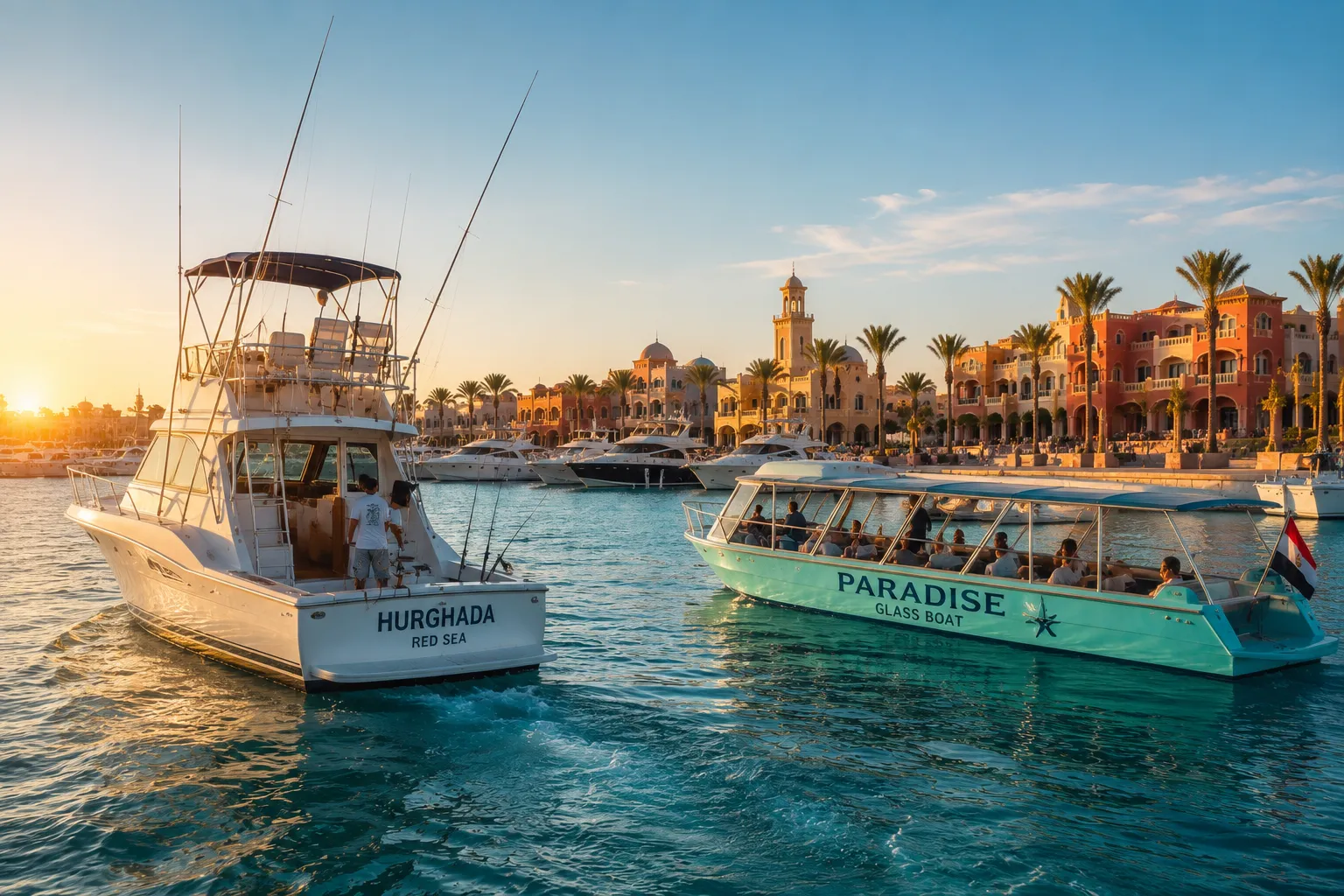
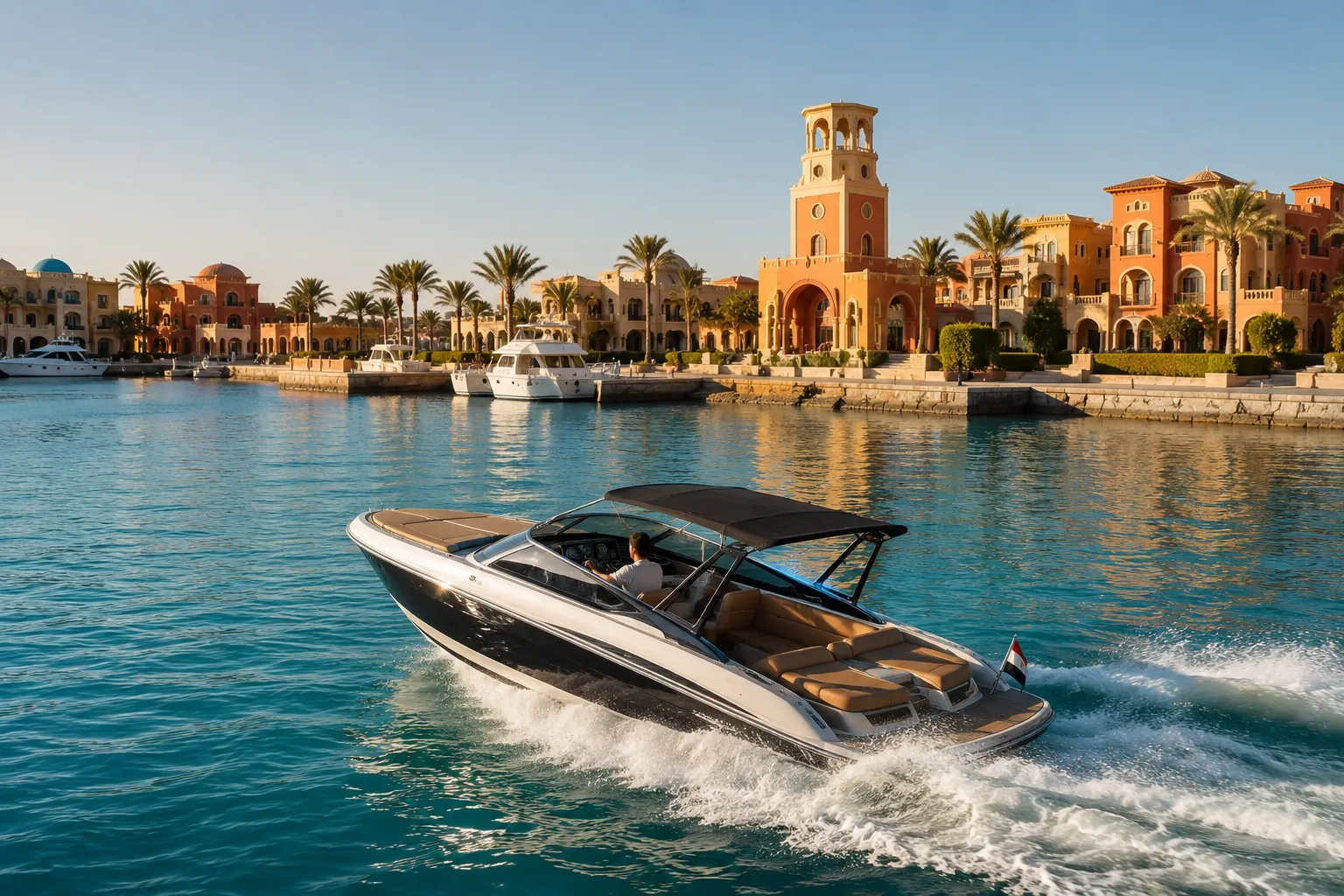
That flexibility is only possible when you control the boat. A shared day-boat runs a fixed route to a single island; a private one goes where you decide and leaves when you say. We can pair a private speedboat for the fast, do-both itinerary with a slower private fishing and glass-boat day for families who want to see the reef without getting wet. For the wider case for going private on the Red Sea, our guide to the best things to do in Hurghada makes it in full.
Do it your way, on your own boat
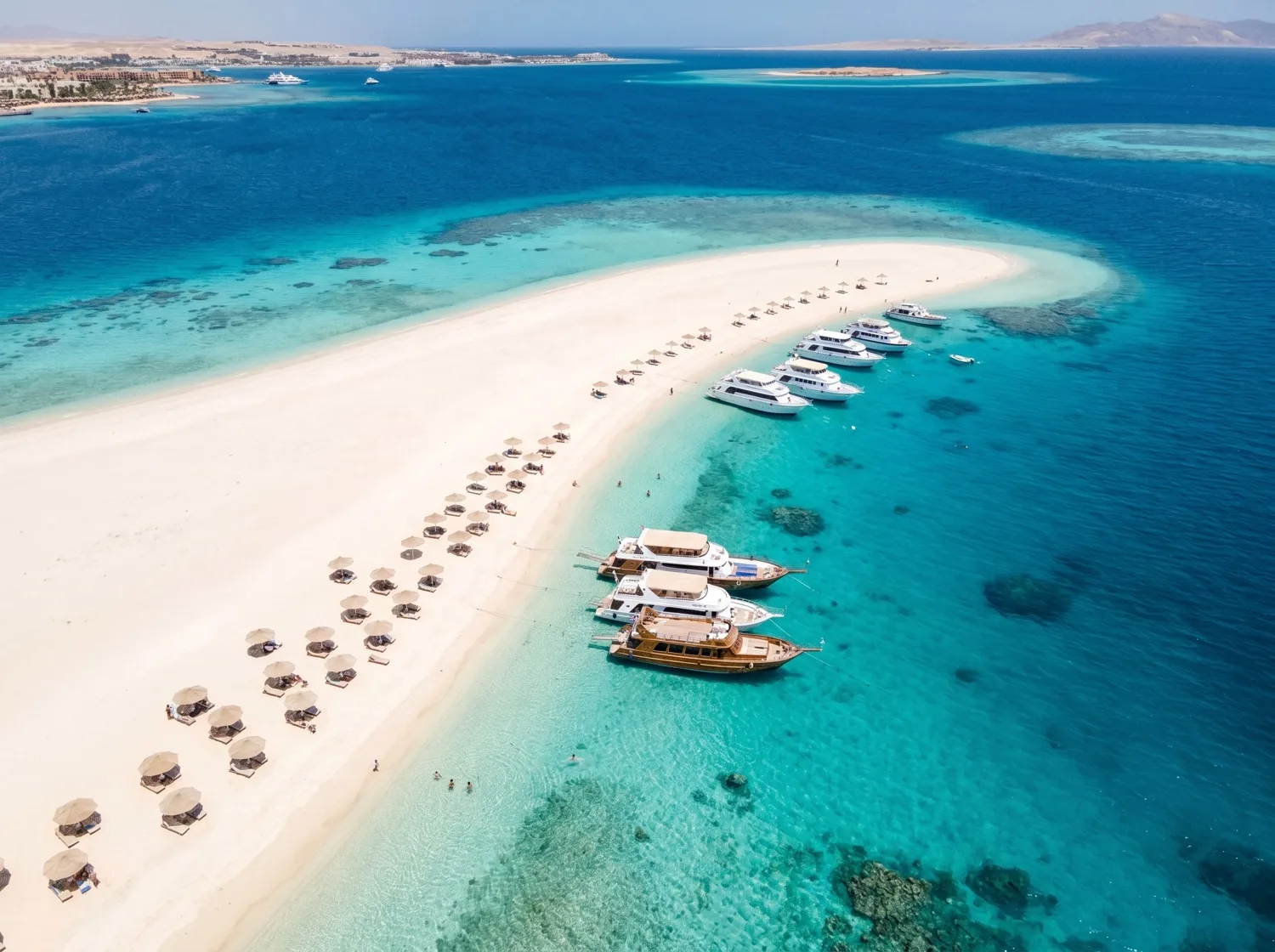
Tell us which island sounds like your kind of day, or tell us you want both, and we will design the crossing around the light, the crowds and the water you most want to see. That is how Solara plans an island day: not a ticket to one beach, but a day on the Red Sea built around you.