The best snorkeling spots in Hurghada are the offshore reefs you reach by boat: Giftun Island, Abu Ramada, Sha'ab El Erg and Fanadir, where the coral is healthiest and the water at its clearest. Big and Small Giftun sit at the top for sheer variety and easy, shallow gardens; Abu Ramada, known to local captains as the Aquarium, is the one to choose if you want fish in every direction. The shore and house reefs near El Gouna and Sahl Hasheesh are gentler and better for a first snorkel, but the marine life is richest a short cruise from the marina.
The best snorkeling spots in Hurghada at a glance
Hurghada sits on one of the healthiest stretches of the northern Red Sea, and the reefs that matter are almost all offshore, reached by a boat that leaves the marina after breakfast and drops you over coral by mid-morning. The names below are the ones our captains return to, ranked for what most guests actually want: clear water, easy shallows, and fish you can put a name to. Read it top to bottom, then choose the two or three that match your confidence in the water.
- Giftun Island (Big and Small Giftun): the all-rounder, shallow coral gardens, best variety, a protected marine park.
- Abu Ramada, the Aquarium: dense fish life on every side, calm and shallow, a photographer's reef.
- Sha'ab El Erg (Dolphin House): a horseshoe reef with resident spinner dolphins and gentle, sandy shallows.
- Orange Bay and Paradise Island: sandbank house reefs and turquoise shallows, ideal for a first snorkel.
- Fanadir: a long fringing reef close to shore, healthy hard coral, usually sheltered from the wind.
- Careless Reef: twin pinnacles and resident moray eels for confident snorkelers and divers.
- Gota Abu Ramada: a small offshore reef thick with clouds of anthias and butterflyfish.
- El Gouna and Sahl Hasheesh house reefs: gentle from-shore snorkeling, the easiest option for beginners and families.
1. Giftun Island: Big and Small Giftun
If you snorkel one reef near Hurghada, make it Giftun. The two islands, Big Giftun and Small Giftun, lie roughly 45 to 60 minutes offshore inside a protected marine park, and the leeward sides hold broad, shallow coral gardens that sit two to five metres under the surface: the kind of easy, sunlit water where you can float for an hour without kicking hard. On the sheltered flats you drift over table corals, cabbage corals and clouds of orange anthias, while the exposed edges fall away into deeper blue for anyone who wants to look down into the drop. The beaches of Mahmya and Orange Bay sit against the same reef system, so a Giftun day often pairs a swim from a sandbank with a proper reef stop. Our Giftun Island guide covers the beaches, the boats and the park in full.
A Giftun day usually runs in two or three stops. The first is often a reef mooring for the best coral, the second a beach or sandbank for lunch and a swim, and a third quick reef stop on the way home if the sea stays kind. Ask which side of the island your captain plans to snorkel, because the leeward flats are the calm, shallow gardens most people picture, while the windward walls are for stronger swimmers who want the drop. Whichever you choose, the coral cover here is among the best you can reach from Hurghada on a day trip, and it shows in the density of the fish.
Giftun charges a small marine park fee, usually a few euros per person, and it goes toward protecting the reef. It is worth every cent, and it is one reason the coral here is in better shape than the busier house reefs. Ask whether your boat has already included it so there are no surprises at the mooring.
2. Abu Ramada, the Aquarium
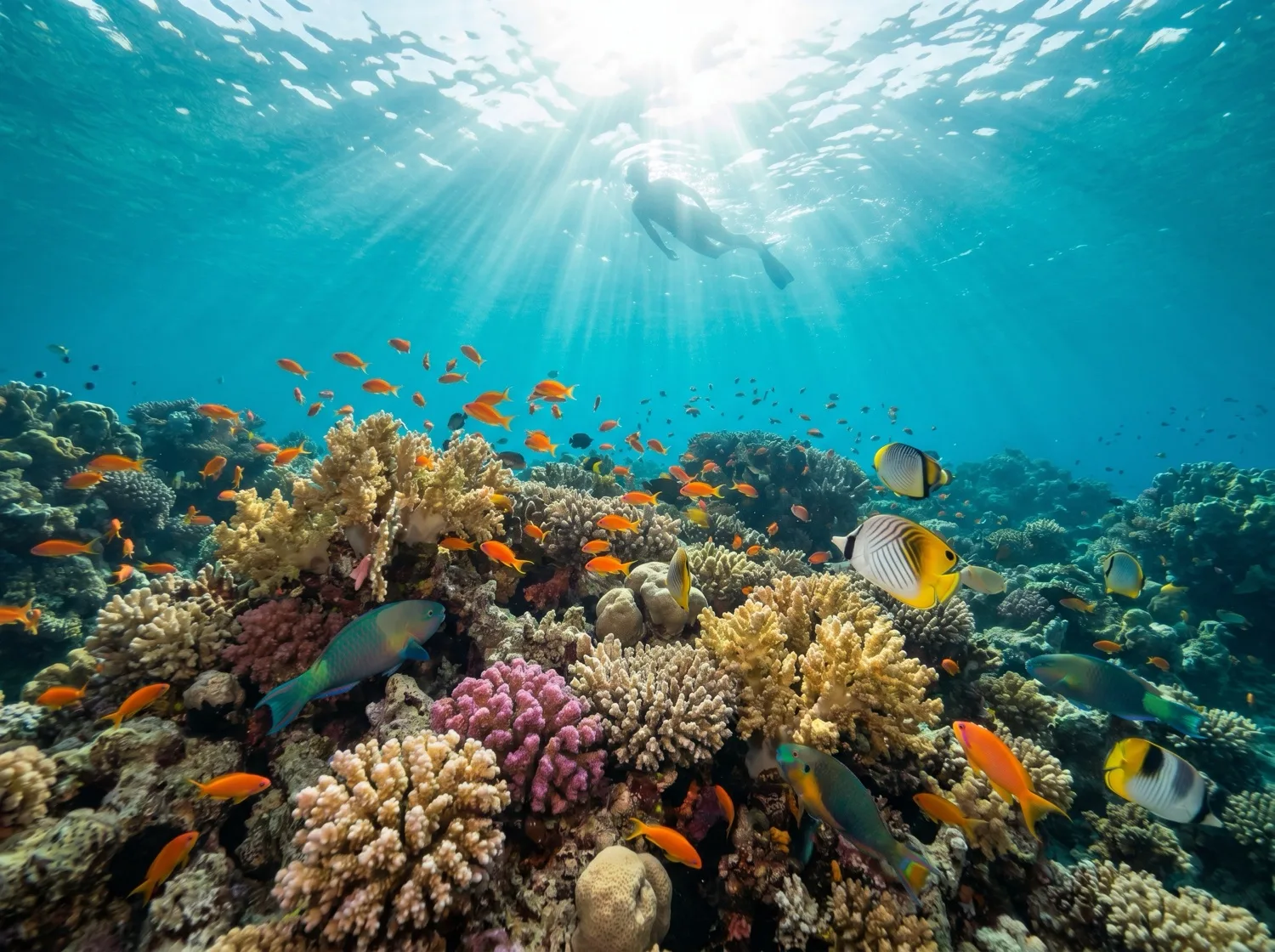
South of Giftun, Abu Ramada earns its nickname. The reef wraps a shallow plateau that stays bright and calm on most mornings, and the fish life is so dense that new snorkelers often stop kicking and simply hover, turning slowly to take it in. Sergeant majors and fusiliers move in schools, parrotfish crunch at the coral, and butterflyfish pair off along the edges. Because the plateau is shallow and usually sheltered, it suits nervous swimmers and anyone travelling with children who are new to a mask, yet it is rich enough that certified divers put it on their own list. If your priority is the most fish in the clearest water for the least effort, this is the spot to ask your captain for.
Depth is part of why it works. Much of the plateau sits in three to six metres of water, shallow enough that the reef stays lit and warm and you never feel out of your depth, yet deep enough to hold a real reef community rather than a thin fringe. On a calm morning the surface goes mirror-flat, and the fish, unbothered by snorkelers, carry on as though you were not there.
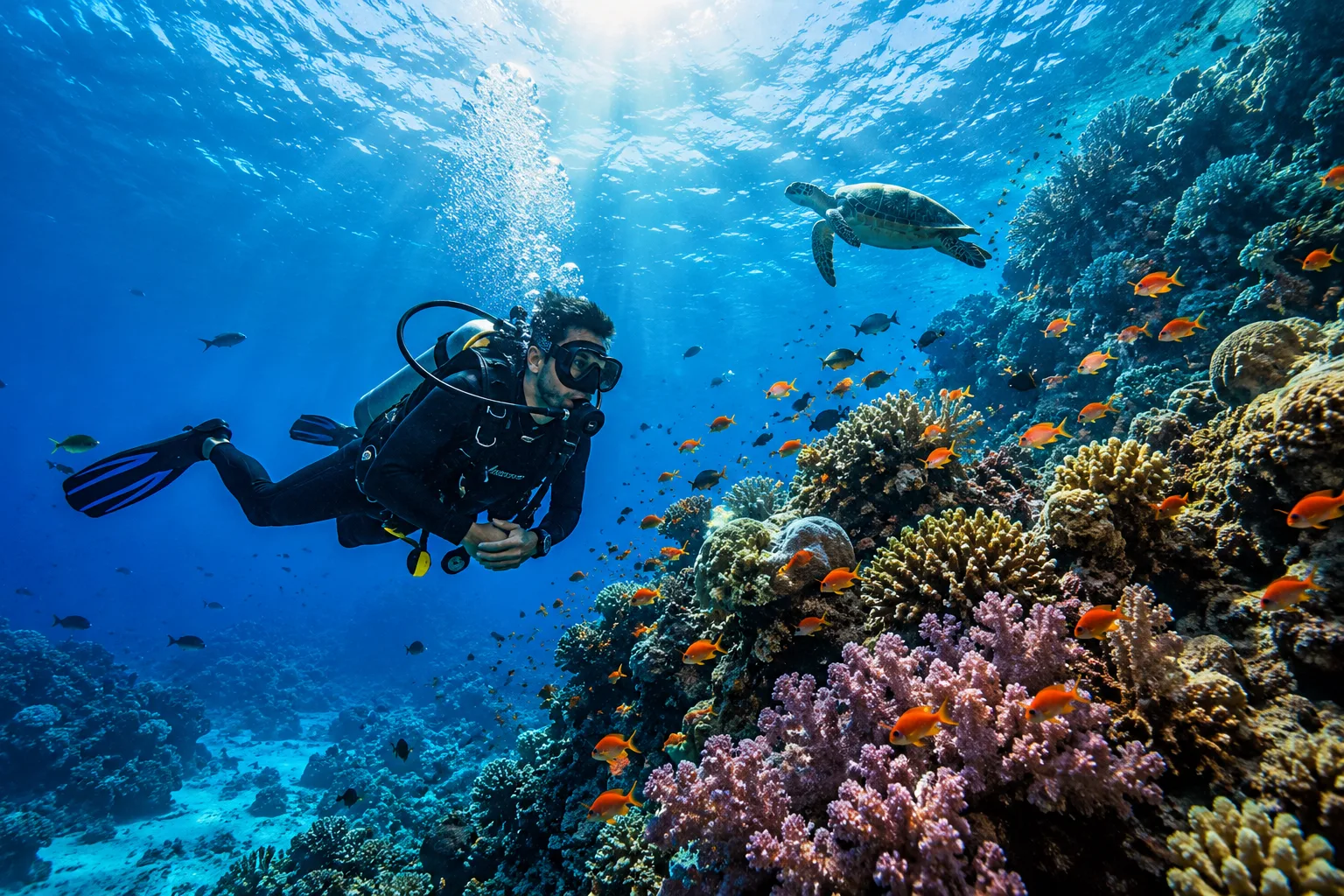
You do not chase fish at the Aquarium. You stay still, and the reef comes to you.Field notes · The Solara Journal
3. Sha'ab El Erg, the Dolphin House reef
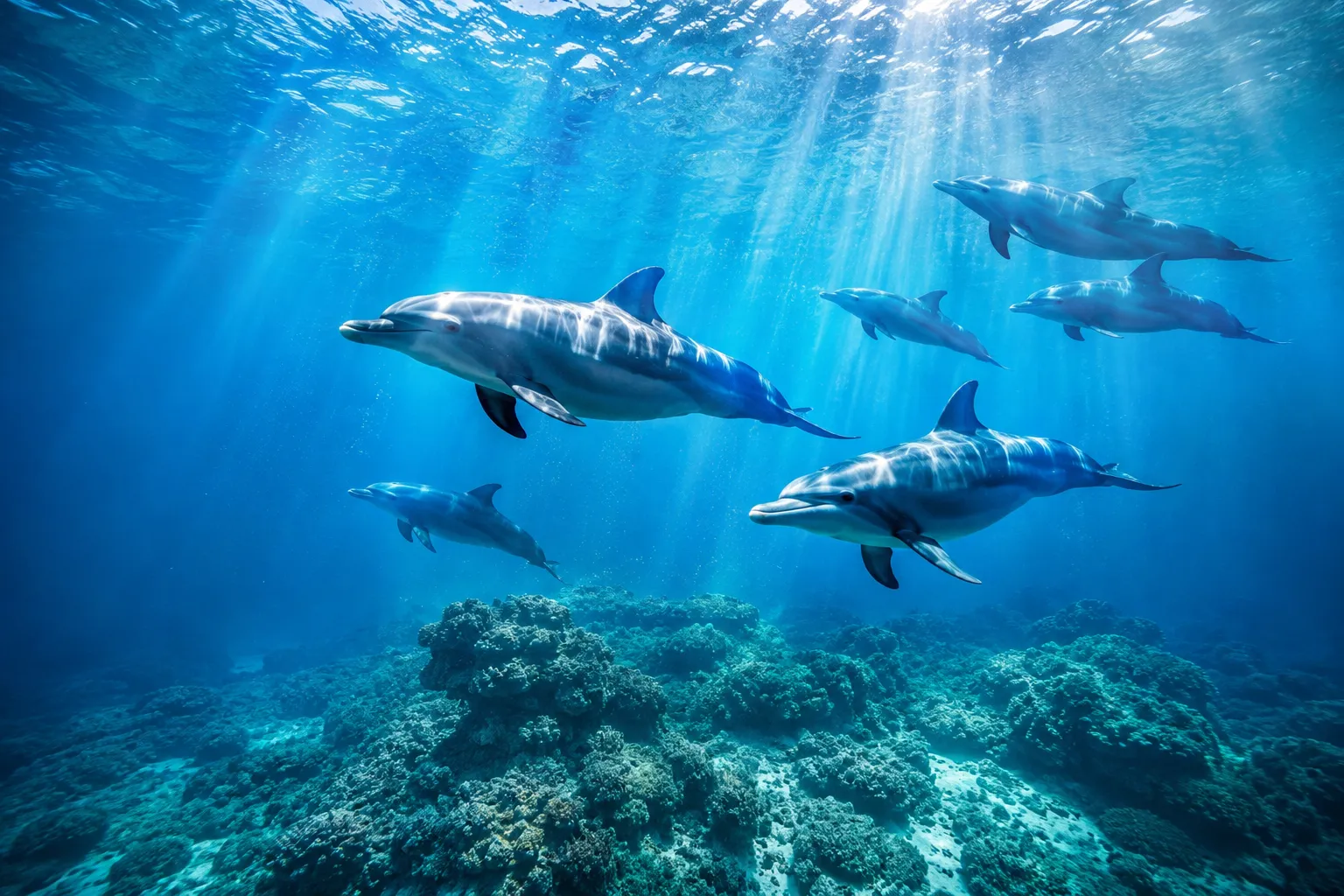
Sha'ab El Erg is a large horseshoe reef north of Hurghada, about an hour or a little more by boat, and it is best known as Dolphin House because a pod of wild spinner dolphins rests inside the lagoon through much of the year. The snorkeling stands on its own even without them: sandy shallows and seagrass beds where green turtles graze, hard coral heads scattered across a pale bottom, and calm, protected water on the inner side. Sightings are wild and never promised, but a dawn Dolphin House trip gives you the flat water and the quiet the dolphins prefer, and the etiquette is simple: enter gently, keep your distance, and let them decide how close the morning gets.
Even on a morning without dolphins, the reef holds its own. The inner lagoon is a nursery of pale sand and seagrass where green turtles come up to breathe between grazes, and the coral heads scattered across the shallows each carry their own small population of fish. Because the horseshoe wraps around the anchorage, there is nearly always a sheltered edge to snorkel whichever way the wind is blowing, which makes it one of the more reliable choices when the forecast is uncertain.
4. Orange Bay and Paradise Island house reefs
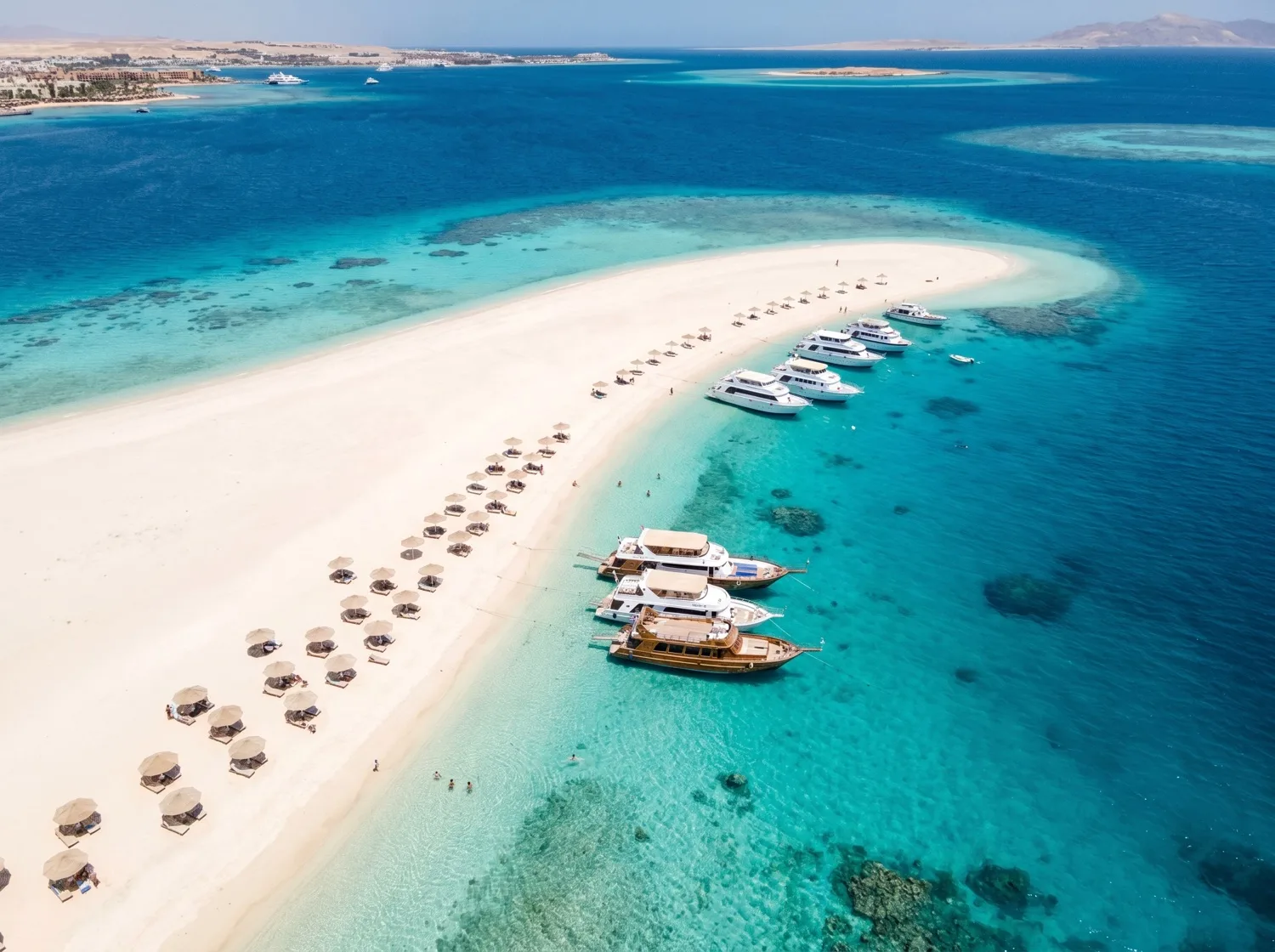
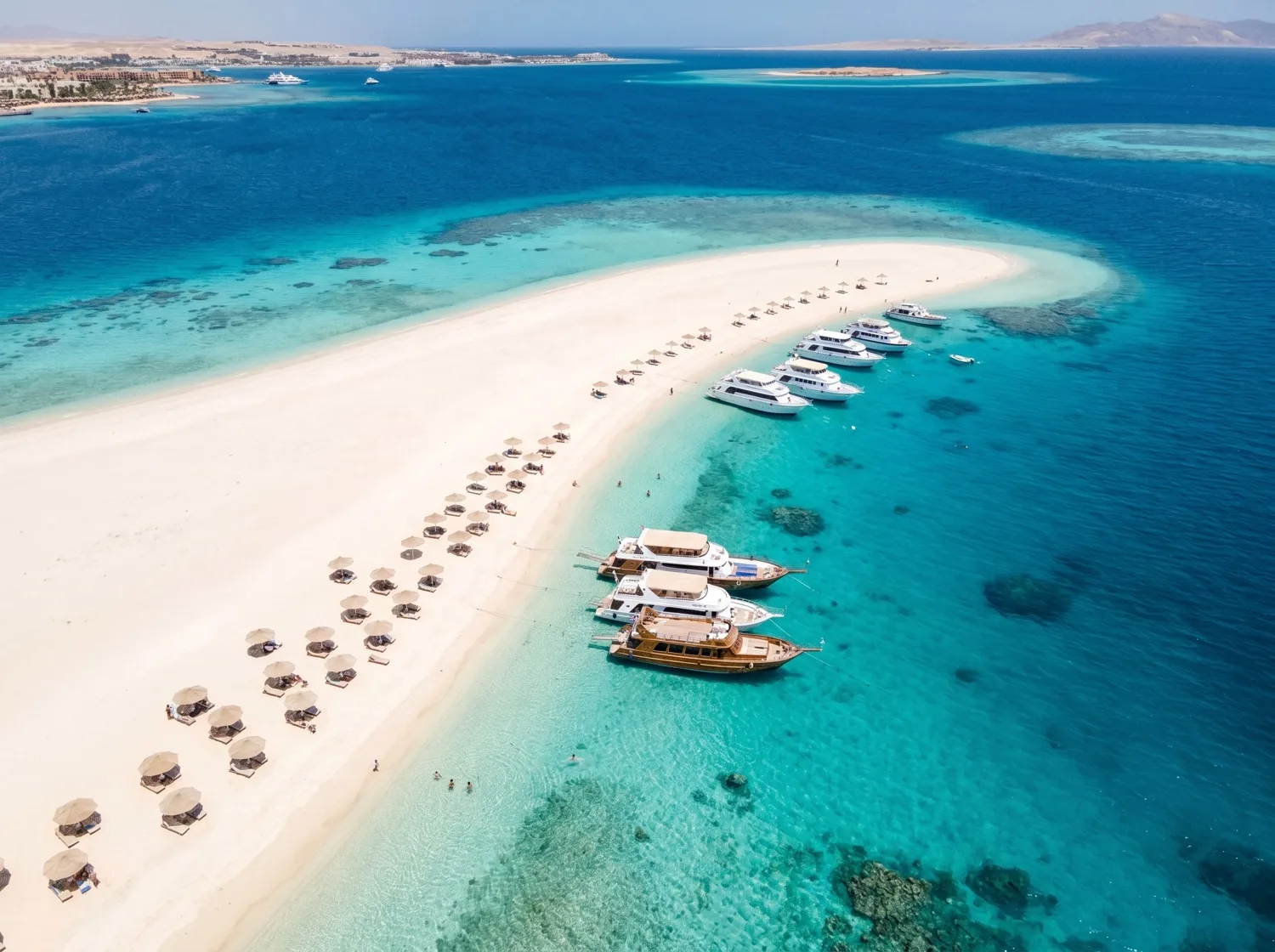
The famous sandbanks are not only for the photographs. Both Orange Bay and Paradise Island have house reefs running along the edge of their turquoise shallows, so you can wade in from warm, waist-deep water and reach living coral within a few fins' kicks: about the gentlest introduction to the Red Sea there is. Expect a shallow fringe of coral, small reef fish, and the occasional blue-spotted ray resting on the sand. It is not the richest coral in this guide, but for a first mask-and-snorkel, or for children building confidence, the combination of a soft sandy entry and calm water is hard to beat. To choose between the two sandbanks, see our Orange Bay vs Paradise Island comparison.
One honest caveat: these are busy places by midday, and busy water is stirred water. The trick is timing. Reach the sandbank early, snorkel the house reef while the sea is still glassy and the day-boats are yet to arrive, then move to the beach as the crowds build. Done in that order, the same reef that feels ordinary at noon can feel like a private aquarium at nine in the morning.
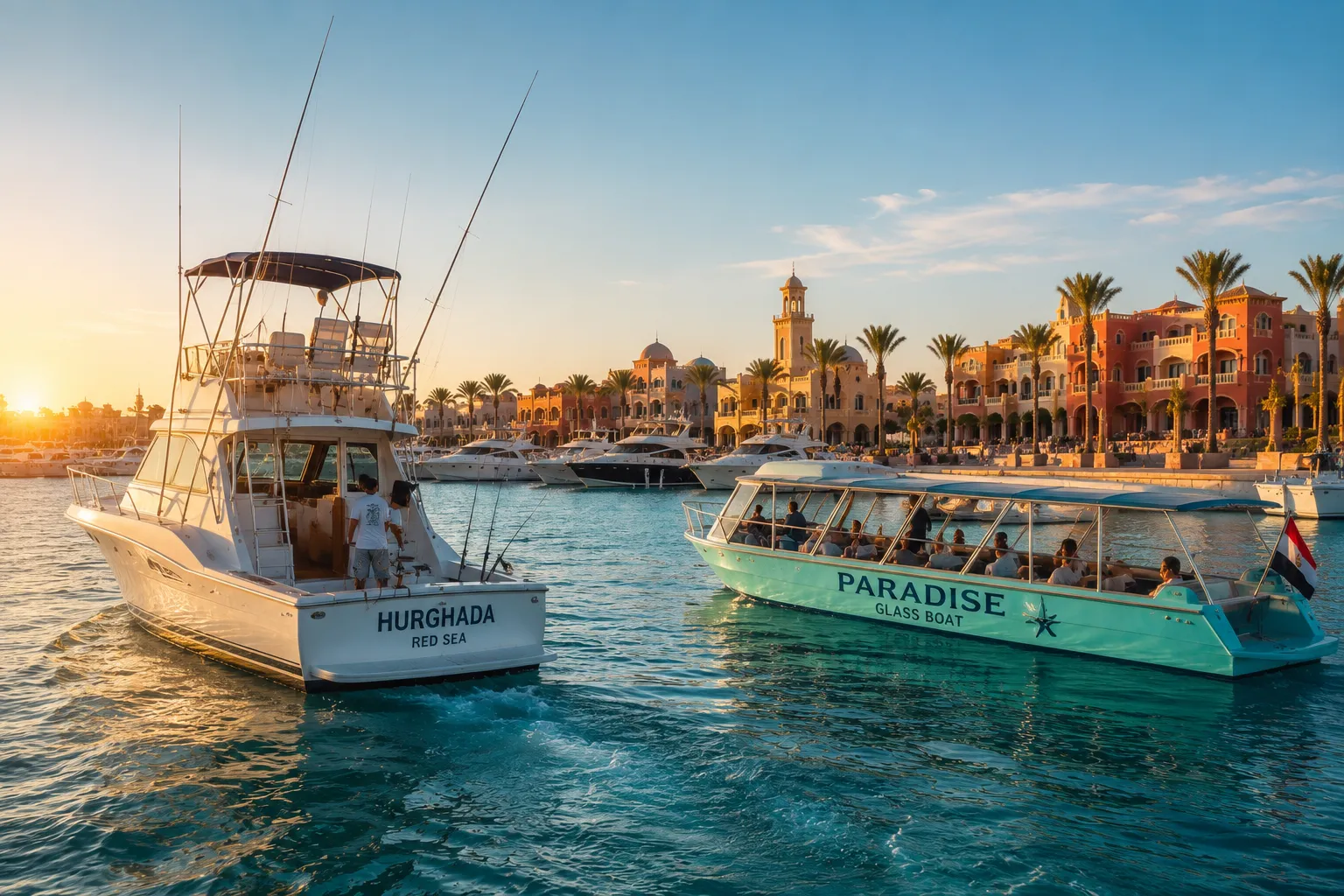
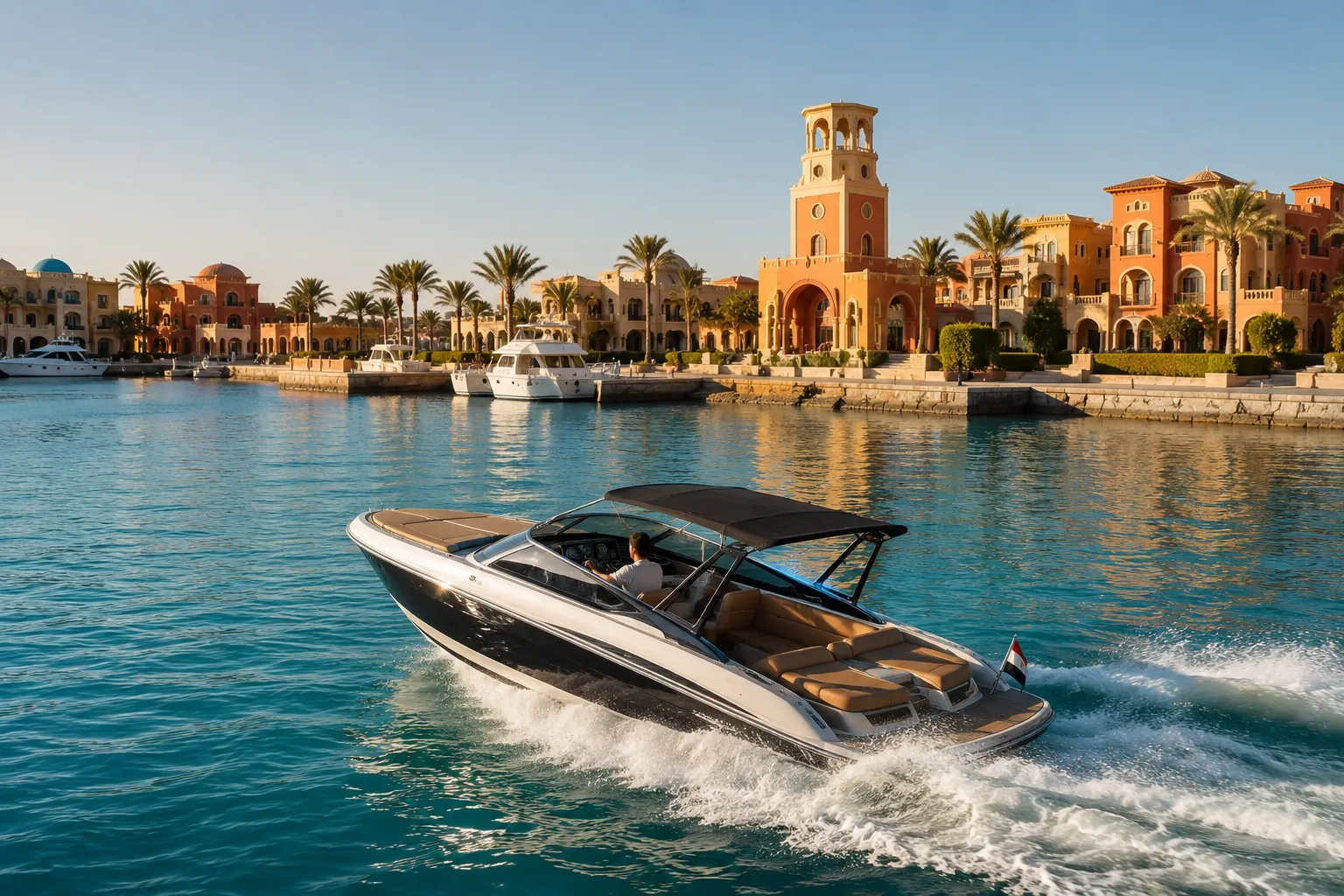
Reach the reefs by boat
5. Fanadir reef
Fanadir is a long fringing reef that runs between Hurghada and El Gouna, close enough to shore that it is often reachable even when the wind is up and the outer reefs are choppy. That shelter is its gift: on a breezy day when Giftun is bouncing, Fanadir stays snorkelable. The reef wall carries healthy hard coral and a steady population of anthias, wrasse and the odd hawkfish perched on a coral head, with a shallow shelf on top for easy floating and a slope for confident snorkelers who want to follow the wall. It rarely makes the marketing brochures, which is exactly why it stays calm and uncrowded on the water.
It is also a good teacher's reef. The shallow shelf on top gives a nervous swimmer somewhere easy to practise, while the slope a few metres away lets a more confident partner follow the wall, so a mixed group can share the same mooring without anyone feeling rushed. Because it sits so close to the coast, the crossing is short and gentle, which helps anyone who found the longer runs out to Giftun or Dolphin House a little much.
For confident snorkelers: Careless Reef and Gota Abu Ramada
Two reefs reward stronger swimmers who are comfortable in open water and happy to look down rather than touch. Both are usually run as boat trips, and both can carry a light current, so they suit people who have already snorkeled a calm reef or two.
6. Careless Reef
Careless Reef is defined by two coral pinnacles, or ergs, that rise from deep water toward the surface. It is famous first as a dive site, home to moray eels that drape between the coral and, on good days, larger fish patrolling the blue. Snorkelers stay up top, floating over the crowns of the pinnacles where the light is best and the fish gather, while the divers on your boat drop deeper. Go on a calm day, keep the boat in sight, and you get the drama of the deep reef from the comfort of the surface.
7. Gota Abu Ramada
Just off Abu Ramada, Gota Abu Ramada is a smaller offshore reef with a well-earned reputation for density. Anthias hang over the coral in orange clouds, butterflyfish and angelfish work the edges, and the whole reef feels busy in the best way. It is shallow enough to snorkel comfortably but sits in open water, so it reads as a confident-snorkeler spot rather than a first swim. Pair it with the Aquarium on the same morning and you have two of the richest reefs in the area back to back.
8. Easy shore snorkeling near El Gouna and Sahl Hasheesh
Not every good snorkel needs a boat. El Gouna, half an hour north, has protected lagoons and jetty reefs where you can slip in from a beach or a pontoon and find reef fish within minutes, and Sahl Hasheesh, to the south, has a curving bay with house reefs off several resort beaches. The coral is patchier than the offshore sites and the visibility swings more with the wind and the tide, but for a lazy afternoon, a warm-up before a bigger boat day, or a family that wants the sea a few steps from a lounger, these are the gentlest options on the coast. If you would rather have the reef to yourselves, a small charter opens up the quiet corners: see our guide to private boat trips on the Red Sea.
What marine life you actually see
The northern Red Sea is a coral sea with very high species diversity, and even a first snorkel over a shallow garden turns up more than most people expect. You do not need to go deep or far to see the headline residents, and the fish here are used to snorkelers, so they rarely bolt.
- Orange anthias hanging in clouds above the coral, the signature Red Sea sight.
- Parrotfish grazing and crunching at the reef, and wrasse working the crevices.
- Butterflyfish and angelfish patrolling in pairs along the reef edges.
- Moray eels tucked into coral heads, mouths opening and closing as they breathe.
- Lionfish drifting slowly in the shade, best admired from a respectful distance.
- Blue-spotted rays resting on sandy patches between coral heads.
- Green turtles grazing seagrass, especially around Sha'ab El Erg and the sandbanks.
- Wild spinner dolphins, on lucky mornings, most often at Dolphin House.
A word on the lionfish and any morays you meet: look, do not reach. Lionfish carry venomous spines, and morays will bite a hand pushed into their crevice. Keep your fingers to yourself and both are a pleasure to watch rather than a hazard.
Seasons shift the cast a little. Summer brings warmer water and, on the outer reefs, the occasional larger visitor passing through the blue, while the cooler months tend to be clearest of all. Turtles and rays are around year-round if you know where to look, over seagrass and sandy patches respectively. None of it is guaranteed, which is the point: a wild reef is not an aquarium, and the mornings it surprises you are the ones you remember.
Beginner or confident: from the shore or by boat
Match the spot to your comfort in the water and the day sorts itself out. Absolute beginners and young children do best at the sandbank house reefs of Orange Bay and Paradise Island, or a sheltered El Gouna lagoon, where the entry is soft sand, the water is shallow, and there is always somewhere to stand. Once you are happy floating with a mask, Abu Ramada and Fanadir are the natural next step: rich, shallow and usually calm. Confident swimmers who can hold a straight line in open water can add Careless Reef, Gota Abu Ramada and the outer walls of Giftun. On a boat you always have a captain, a ladder and a spotter, which is why a guided reef day is the safest way to try a livelier site for the first time.
There is a boat question too, not just a reef question. A large group day-boat is the cheapest way onto the water and perfectly good for the calm sites, though you snorkel on the boat's schedule and share the reef with a crowd. A small-group or private charter costs more and buys you the things that actually shape a snorkel: an early departure, a captain who reads the wind, time to stay in the water when it is good, and the freedom to pick a quieter mooring when the popular reefs fill up.
Water clarity and the best conditions
The Red Sea is famously clear, with visibility often in the 20 to 30 metre range on a settled day, and it stays warm year-round: roughly 22C in the depths of winter and 27 to 30C through summer, so a thin wetsuit or a rash vest is plenty for most people. The variable that matters most is wind. A flat, still morning gives you glassy water and effortless snorkeling; an afternoon breeze churns the surface, stirs up fine sediment near the shore reefs and makes the crossing bouncier. That is why the best boats leave early, before the wind builds. For a month-by-month view of the sea and the weather, read our guide to the best time to visit Hurghada.
Currents deserve a mention. Most of the shallow, sheltered sites in this guide have little more than a gentle drift, but the offshore reefs and the outer walls can pick up a current with the wind and the tide, which is one more reason to snorkel them with a boat and a spotter rather than striking out alone. When there is a drift, start into it and let it carry you back toward the boat, never the other way around, when a tired swimmer would be left fighting the water home.
The clearest water is almost always the earliest water. Book the boat that leaves the marina first, and the reef is yours before the wind arrives.Solara concierge
Reef etiquette, conservation and the Giftun park fee
The Red Sea reefs are alive, and they are fragile. The single most important rule is the simplest: never touch or stand on coral. A careless fin kick or a hand steadying against the reef can kill growth that took decades to form, and standing on a coral head crushes it outright. Keep a horizontal float, watch your fins, and take nothing but photographs. Do not feed the fish, do not chase turtles or dolphins, and give any animal that is resting a wide berth. The Giftun marine park fee exists precisely to fund this protection, which is part of why paying it, gladly, is part of snorkeling here well.
Pack reef-safe sunscreen and, better still, wear a rash vest or a light long-sleeved top instead of coating yourself in lotion before you get in. Common chemical sunscreens harm coral, and a shirt in the water protects both your back from the sun and the reef from the run-off.
Gear, comfort and seasickness
Good gear turns an average snorkel into an easy one. A mask that seals to your face is the whole game, so test the fit before you commit to a day: press it on without the strap, breathe in through your nose, and it should hold. Add fins for control over the reef and a rash vest for sun and warmth, and skip the full-face masks, which are best avoided for anything beyond a gentle float. Reef shoes make sandy and rocky entries painless. If you burn, remember that the back of your neck and your calves face straight up at the sun for hours, so cover them.
A few small things save a snorkel. A little anti-fog, or the old trick of a smear of saliva rubbed round the lens and rinsed, keeps the mask clear. Tighten the strap over the crown of your head, not the back, so the mask sits higher and seals better. And defog and fit the mask on dry land before you get in, because sorting it out while treading water over a reef is nobody's idea of a good start.
If you are prone to seasickness, take a tablet an hour before boarding, choose a larger, steadier boat, and sit low and central where the motion is least. Watch the horizon rather than your phone on the crossing, and stay on deck in the fresh air. The reef stops are calm; it is the ride out that catches people.
Planning the best snorkeling spots in Hurghada with Solara
The best snorkeling spots in Hurghada are not a secret, but doing them well is a matter of timing, boats and the person reading the water on the day. We plan reef mornings that leave early for the clearest water, we match the sites to your confidence rather than to a fixed itinerary, and we keep the groups small so the reef stays quiet. Browse the full Solara Journal for more Red Sea guides, see the wider list in our best things to do in Hurghada, or look through our experiences and tell us how you like to be in the water. We will build the day around it.