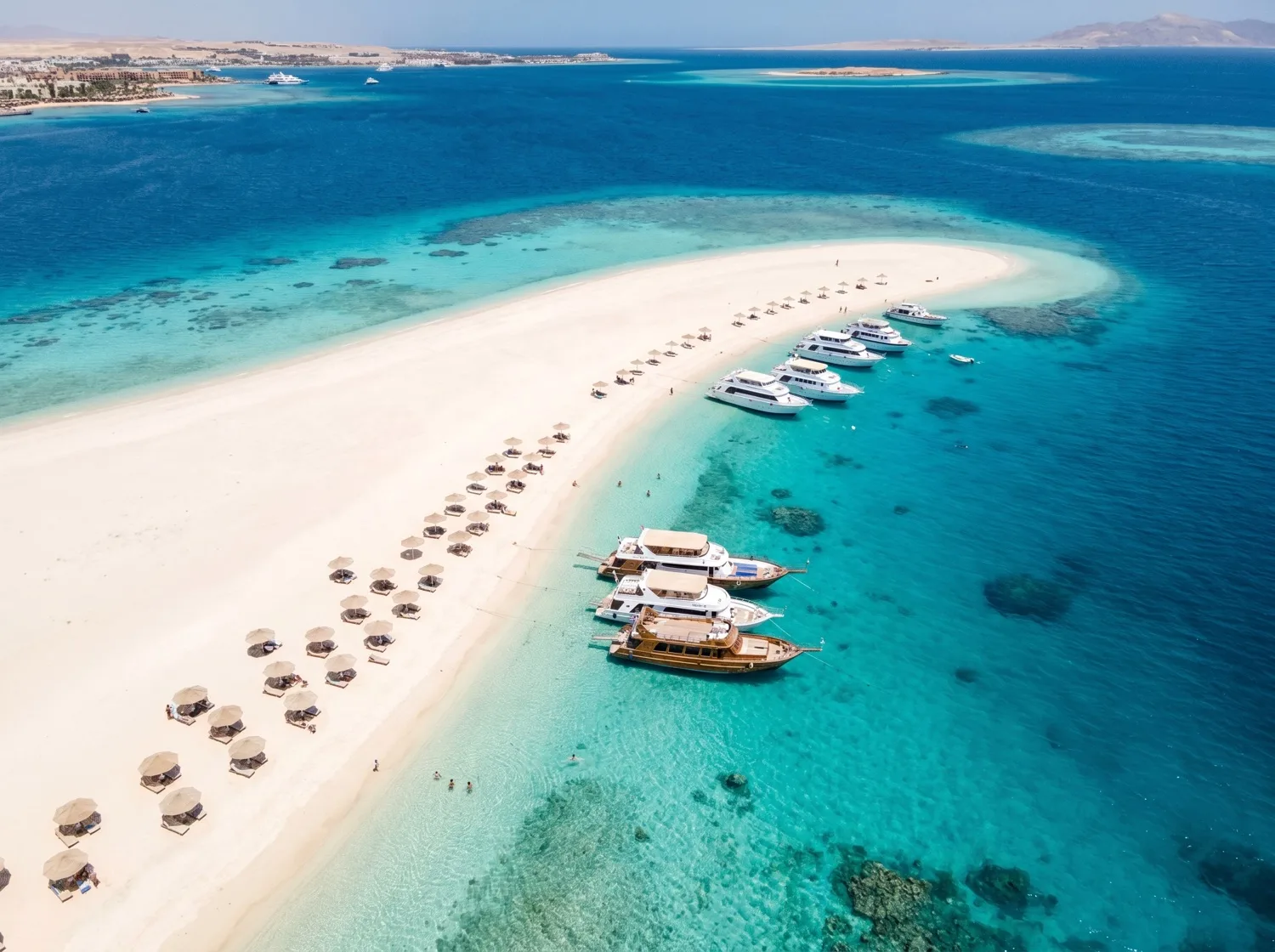
Giftun Island is not a single beach but a protected marine national park off Hurghada, a cluster of coral reefs and sandbanks that includes the famous shallows of Orange Bay, Paradise Island and Mahmya. Two islands anchor the reserve, Big Giftun and Small Giftun, and almost everything you have seen photographed here, the impossible turquoise, the coral walls, the white sandbars, sits inside the same conservation area. This guide explains what Giftun actually is, how to reach it, what the park fee pays for, and how to spend a day there without the crowds.
What is Giftun Island, exactly?
Ask ten visitors what Giftun Island is and you will get ten answers, because the name covers more than one thing. Officially, Giftun is the Giftun Islands Protected Area, a marine national park declared in the mid-1990s to shield one of the richest stretches of reef on the Egyptian Red Sea. It sits a short crossing east of Hurghada, and it is made up of two islands, a scatter of fringing reefs, and the shallow sandbanks that form where those reefs meet open water. When a boat ticket sells you Orange Bay or Paradise Island, it is selling you a landing spot inside this reserve. Understanding that single fact changes how you plan the day. You are not choosing between rival beaches so much as choosing where to step ashore inside one protected seascape.
That distinction is also why Giftun outranks almost any other island name on the Hurghada coast. The water is clear because the reef is alive, and the reef is alive because the whole area is managed, patrolled and fee-funded. The beaches are the reward. The reef is the reason.
Giftun Island at a glance
The short version, before the detail below:
- What it is: the Giftun Islands Protected Area, a marine national park off Hurghada, not one single beach.
- The two islands: Big Giftun (Giftun Kebir) and Small Giftun (Giftun Soraya).
- The famous sandbanks: Orange Bay, Paradise Island and Mahmya all sit inside the reserve.
- Getting there: roughly 45 to 90 minutes by boat from Hurghada marina, depending on your craft and destination.
- The park fee: a per-person conservation charge, usually a few euros, collected on top of your boat ticket.
- Best for: snorkeling over living coral, calm turquoise shallows, and a full, unhurried day on the water.
- When to go: arrive early, ideally before 10am, for the calmest water, the brightest colour and space on the sand.
Big Giftun and Small Giftun: the two islands
The reserve takes its name from two low, sun-bleached islands. Big Giftun, known locally as Giftun Kebir, is the larger of the pair, a long spine of limestone and desert scrub edged with sheltered bays and drop-offs. Small Giftun, or Giftun Soraya, lies to the south and is quieter still, ringed by reef that falls away into deep blue. Neither island is a resort. They are uninhabited protected land, and the beaches most people visit are the offshore sandbars and the licensed beach concessions that sit along their edges rather than the rocky interiors themselves.
This matters when you read a listing. A trip to Mahmya lands you on the sheltered flank of Big Giftun. A trip to Orange Bay drops you on a sandbank in the same waters. Both are Giftun. The reef systems that ring both islands are the real headline, and they are the reason the whole area was protected in the first place.
The islands are protected for more than their reefs. Big Giftun and Small Giftun are important seabird habitat, with ospreys nesting on the higher ground and gulls wheeling over the shallows, which is one reason landings on the islands' interiors are restricted and the beaches are kept to marked concessions. You come for the water, and the birds keep the land. It is a division that has held the reserve together for three decades.
Where Orange Bay, Paradise Island and Mahmya fit
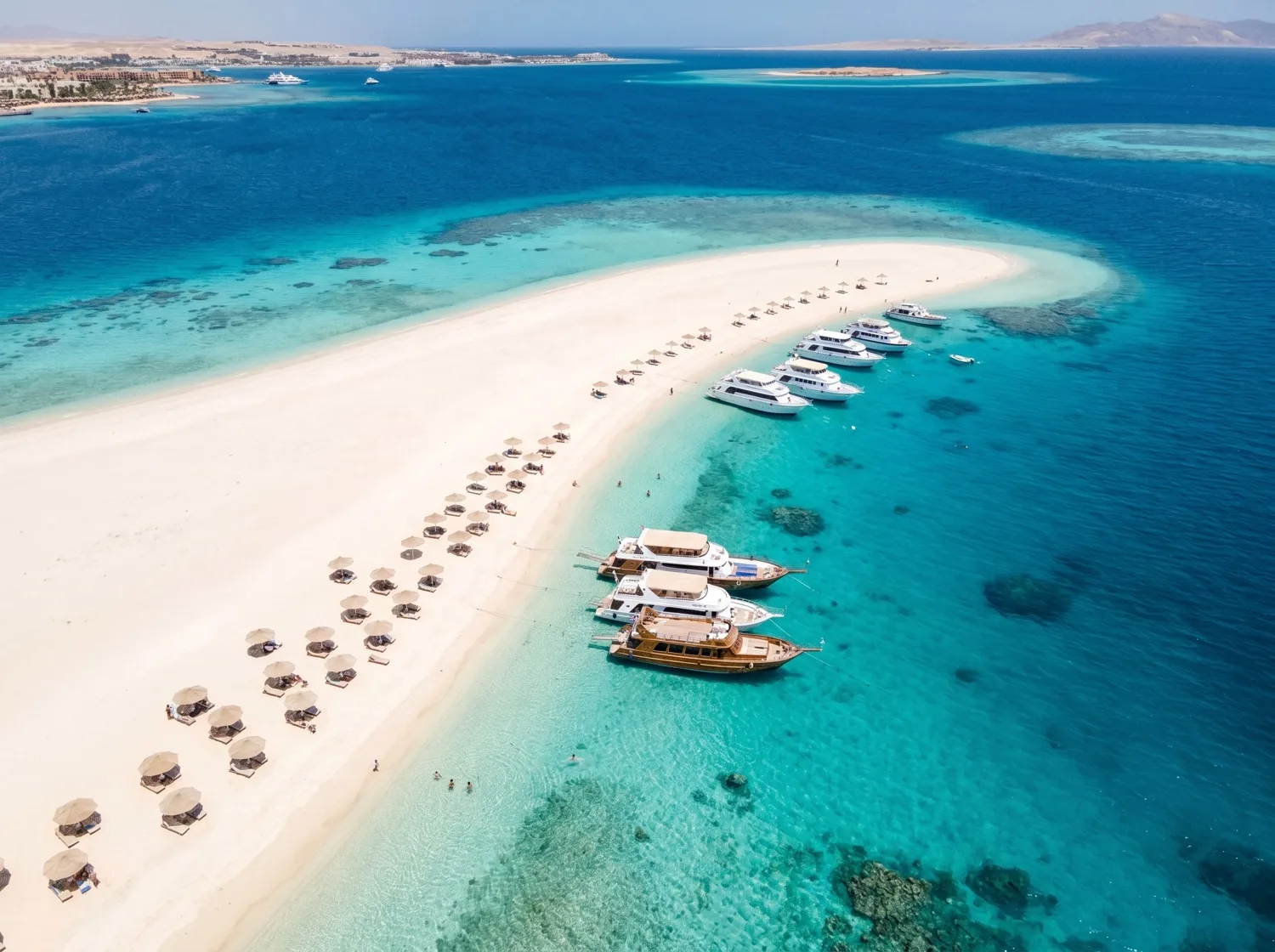
Here is the part the ticket sellers rarely explain. Orange Bay, Paradise Island and Mahmya are not competing destinations in different corners of the sea. They are three different landing spots inside the Giftun reserve, each with its own character. Orange Bay is the photogenic sandbank with the glowing shallows and the loungers. Paradise Island is smaller and reef-fringed, better for a quiet snorkel. Mahmya is a managed beach on Big Giftun itself, greener and calmer, run as a low-density day club. If you are weighing one against another, our Orange Bay versus Paradise Island comparison lays out which suits which kind of day.
What is the Giftun national park fee, and why does it exist?
Every visitor to the Giftun Islands Protected Area pays a small conservation fee, collected per person on top of the boat ticket. It is usually a few euros, payable in euros or Egyptian pounds, and reputable operators fold it into the trip or point it out clearly before you sail. The money is not a tourist tax in disguise. It funds the ranger patrols, the mooring buoys that stop boats dropping anchor on coral, the waste removal, and the daily-visitor limits that keep the busiest sandbanks from being loved to death.
If a quote looks suspiciously cheap, the fee is often the thing that has been left out, and it will be asked for at the island instead. Knowing it exists means you are not caught out, and it is worth paying gladly. The clarity of the water you came for is a direct result of it.
It is worth budgeting for the small extras that make the day run smoothly: a little cash for the fee, a tip for a crew who look after you well, and a few pounds for a cold drink at a beach concession. None of it is large, but arriving prepared means the only thing you think about all day is when to get back in the water.
Carry a little cash in small euro notes or Egyptian pounds for the park fee, even if your operator says it is included. It smooths the landing, and it is the one charge on the day that genuinely goes back into the reef.
How do you get to Giftun Island from Hurghada?
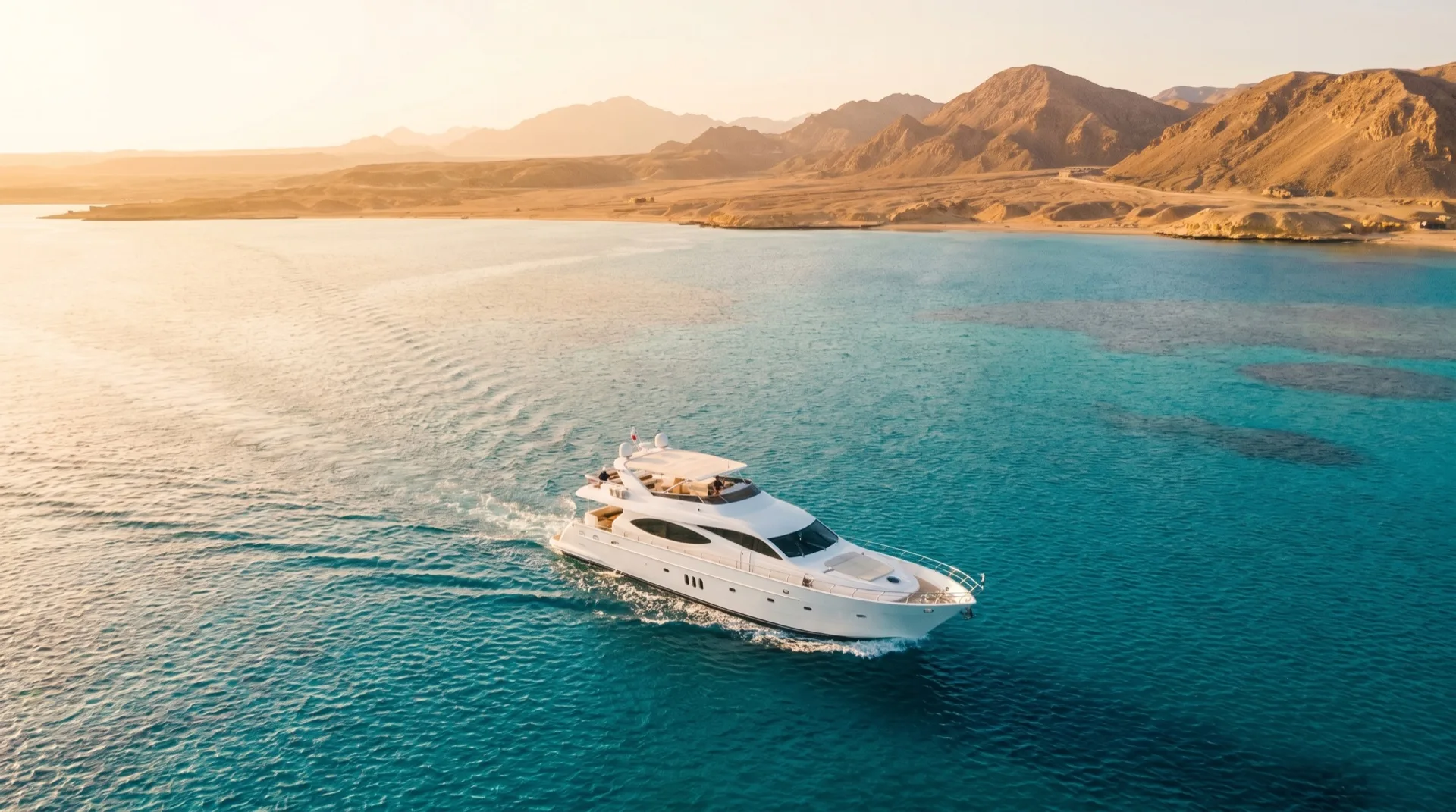
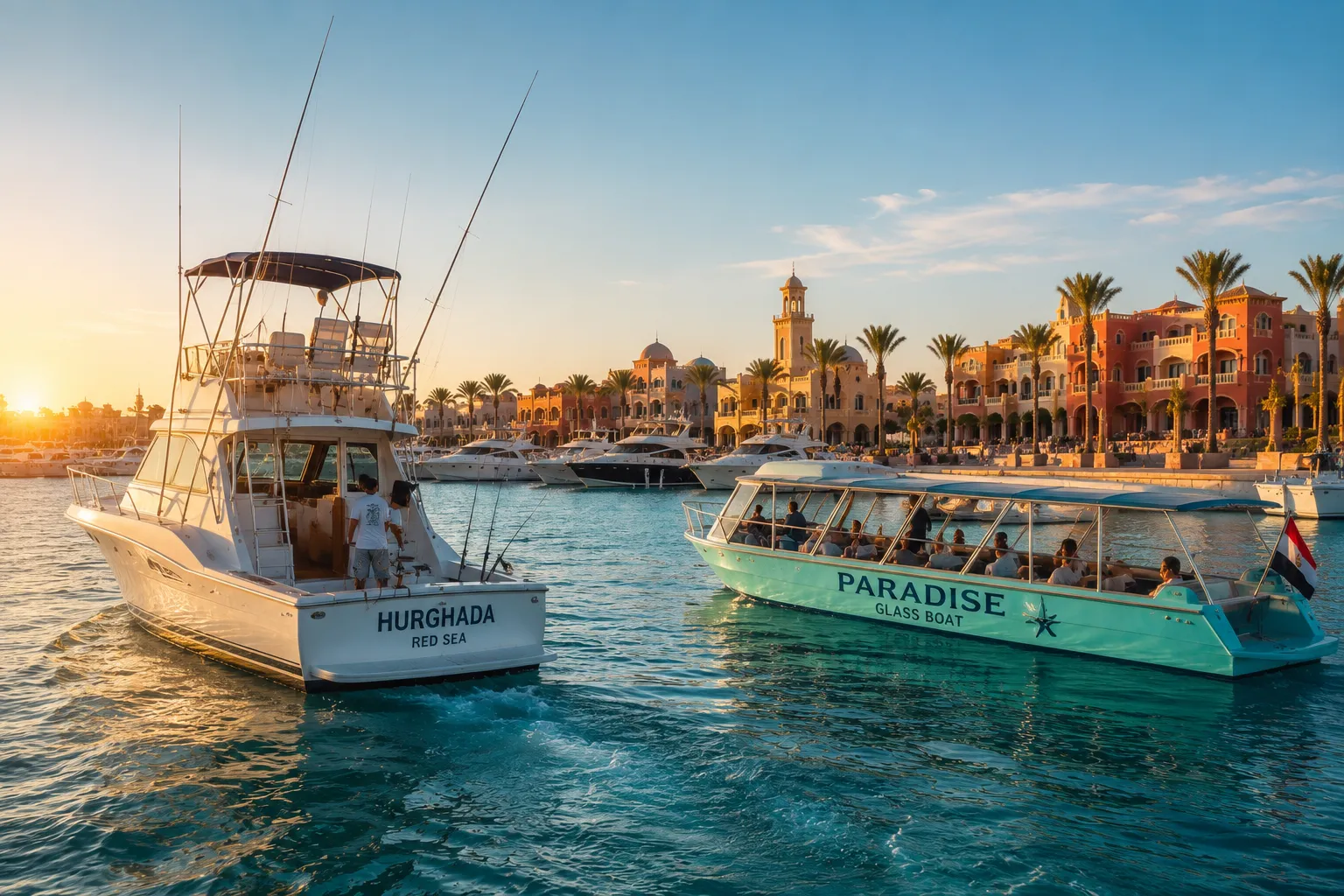
Every trip leaves from the water. Boats depart from the Hurghada marina and the resort jetties along the coast, and the crossing runs from roughly 45 minutes to about 90 minutes depending on the boat and where you are heading. A fast speedboat or a private craft reaches the near sandbanks in well under an hour. A large shared day-boat is slower and calls at more stops. There is no bridge, no ferry terminal and no way to drive there. The island is reached only by sea, which is part of why an early, well-run departure changes the whole day.
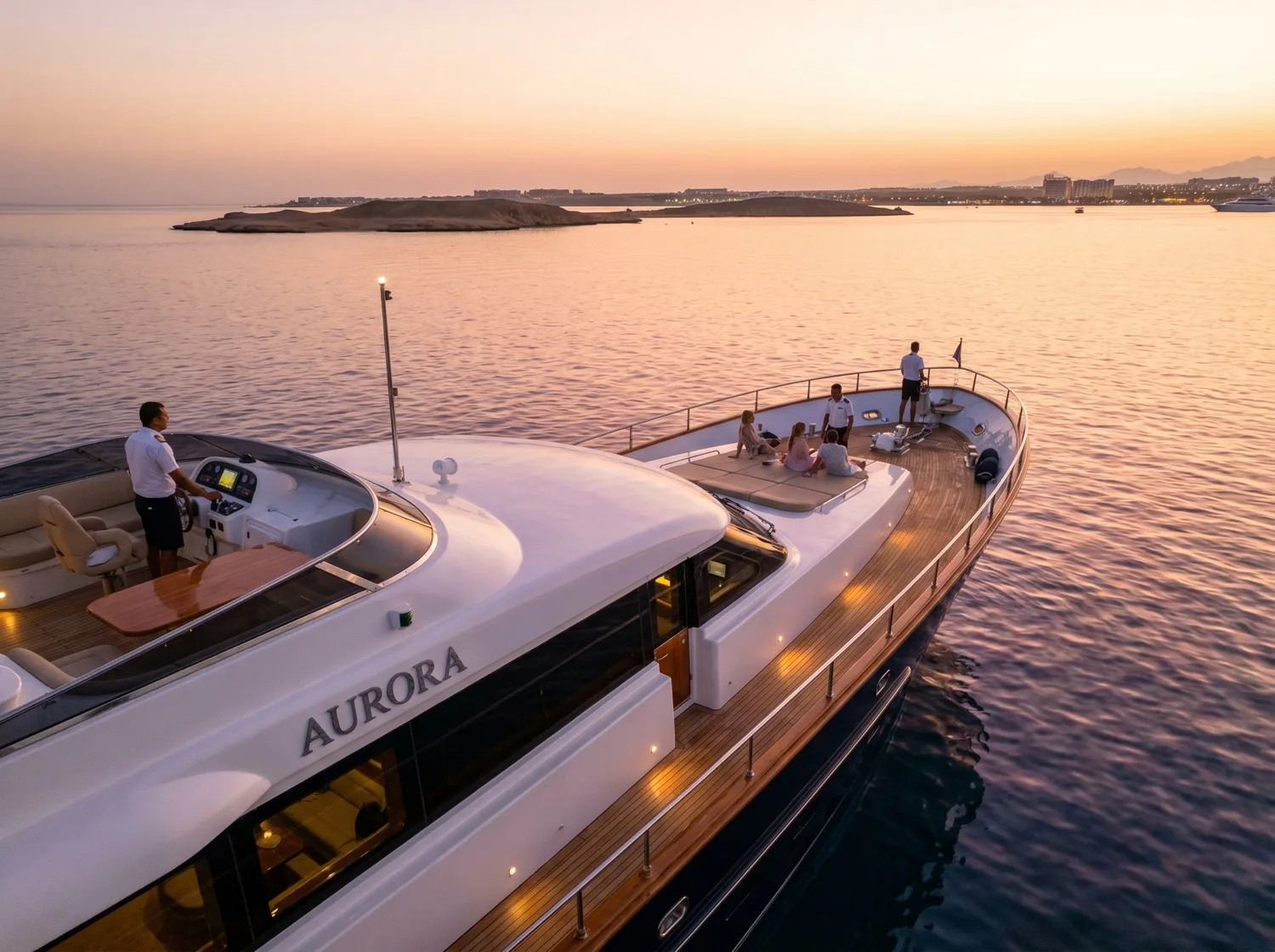
The style of boat shapes the experience as much as the destination. A crowded double-decker with a hundred strangers and a buffet queue is a very different day from a small speedboat or a private glass-bottom boat that anchors where you like and moves on when you are ready. For a fuller picture of the coast and how the trips connect, our complete Hurghada travel guide sets the scene.
A word on the crossing itself. The Red Sea is usually calm in the morning and can build a light chop by afternoon, so if you are prone to seasickness, take the early boat and sit low and central. Bring less than you think: a towel, reef-safe sunscreen, water shoes for the coral-strewn shallows, and a dry bag for a phone. Most trips supply mask, snorkel and fins, but a mask that actually fits your face is the one thing worth bringing your own.
Ways to reach the Giftun reserve
The beaches versus the reefs
Giftun gives you two very different things in the same day, and it helps to know which you came for. The beaches are the sandbanks and the sheltered bays: warm, shallow, calm water over pale sand, ideal for wading, floating and long lazy hours in the shade. The reefs are the living edges where the sand drops into deeper blue, dense with hard and soft coral and the fish that shelter in it. The finest moments here happen at the boundary between the two, where you can stand in waist-deep turquoise, take three strokes, and find yourself hanging over a coral wall.
The sandbanks themselves are a quirk of the reef. They form where currents pile coral sand into shifting bars just below and above the waterline, which is why a place like Orange Bay can look like a ribbon of beach with sea on both sides. They move and change with the seasons, and at high water some shrink to a sliver. You are standing on the reef's own making, not on solid land, which is part of why the crew ask you to keep to the sand and off the coral.
The sandbank is what people photograph. The reef ten metres beyond it is what they remember. Giftun gives you both in a single afternoon, which is rarer than it sounds.Field notes · The Solara Journal
Snorkeling and diving around Giftun
Snorkeling is the heart of a Giftun day, and you need no experience for it. A mask, a slow float and a little patience over the fringing reef reveal anthias in clouds, parrotfish grazing the coral, and the occasional unbothered turtle. The visibility is often extraordinary, and the shallows stay warm through most of the year. For the specific spots and how to read the reef, our guide to the best snorkeling spots in Hurghada maps the area in detail.
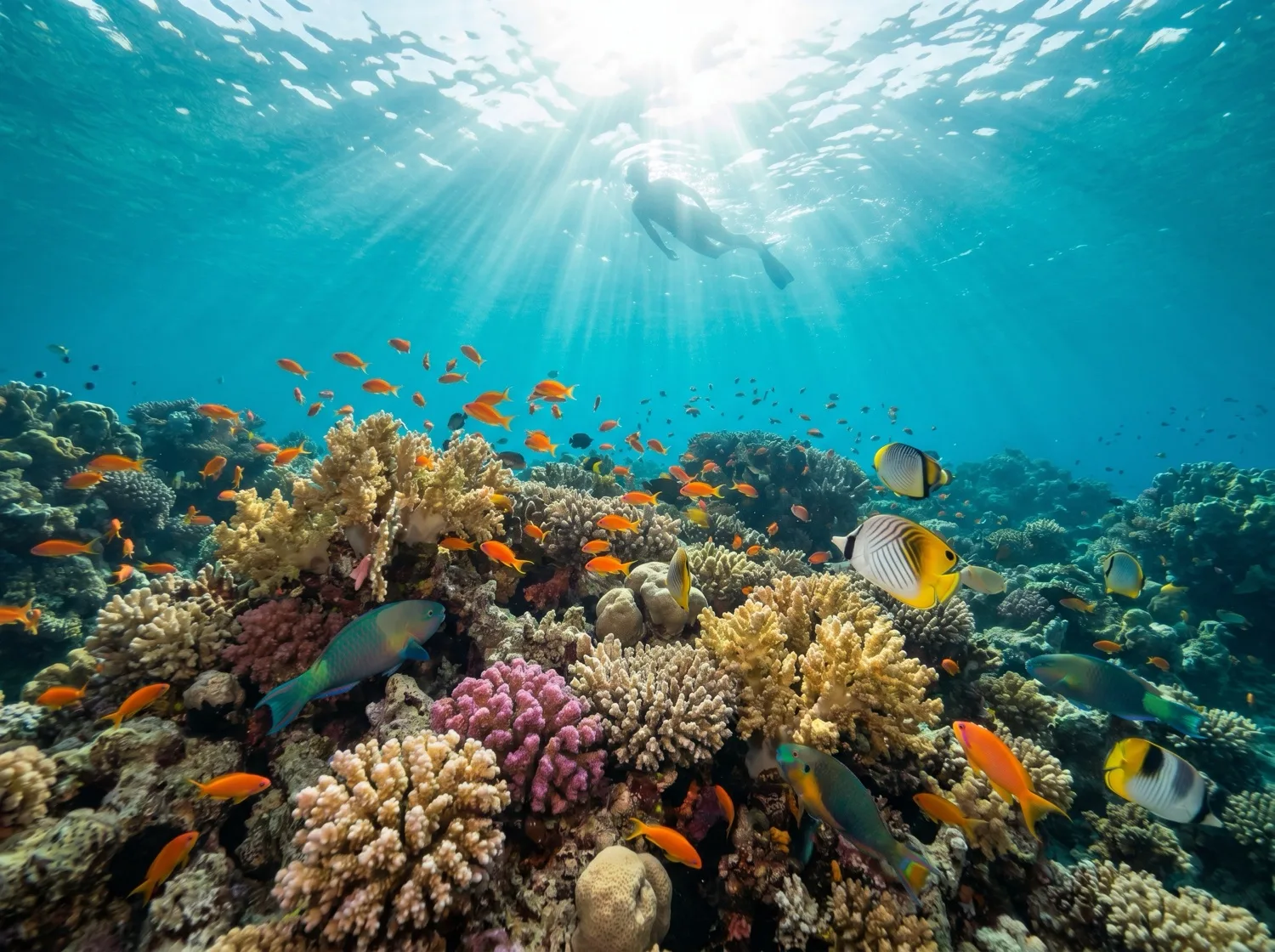
What you see depends a little on where the crew drops you. The shallow reef tops hold the colour: clouds of orange anthias, sergeant majors, wrasse and the occasional moray tucked into a crevice. The reef edges, where the coral falls into blue, are where the bigger fish patrol, and with luck a green turtle grazing or a ray gliding over the sand. Move slowly, keep your fins up and off the coral, and the reef comes to you rather than the other way around.
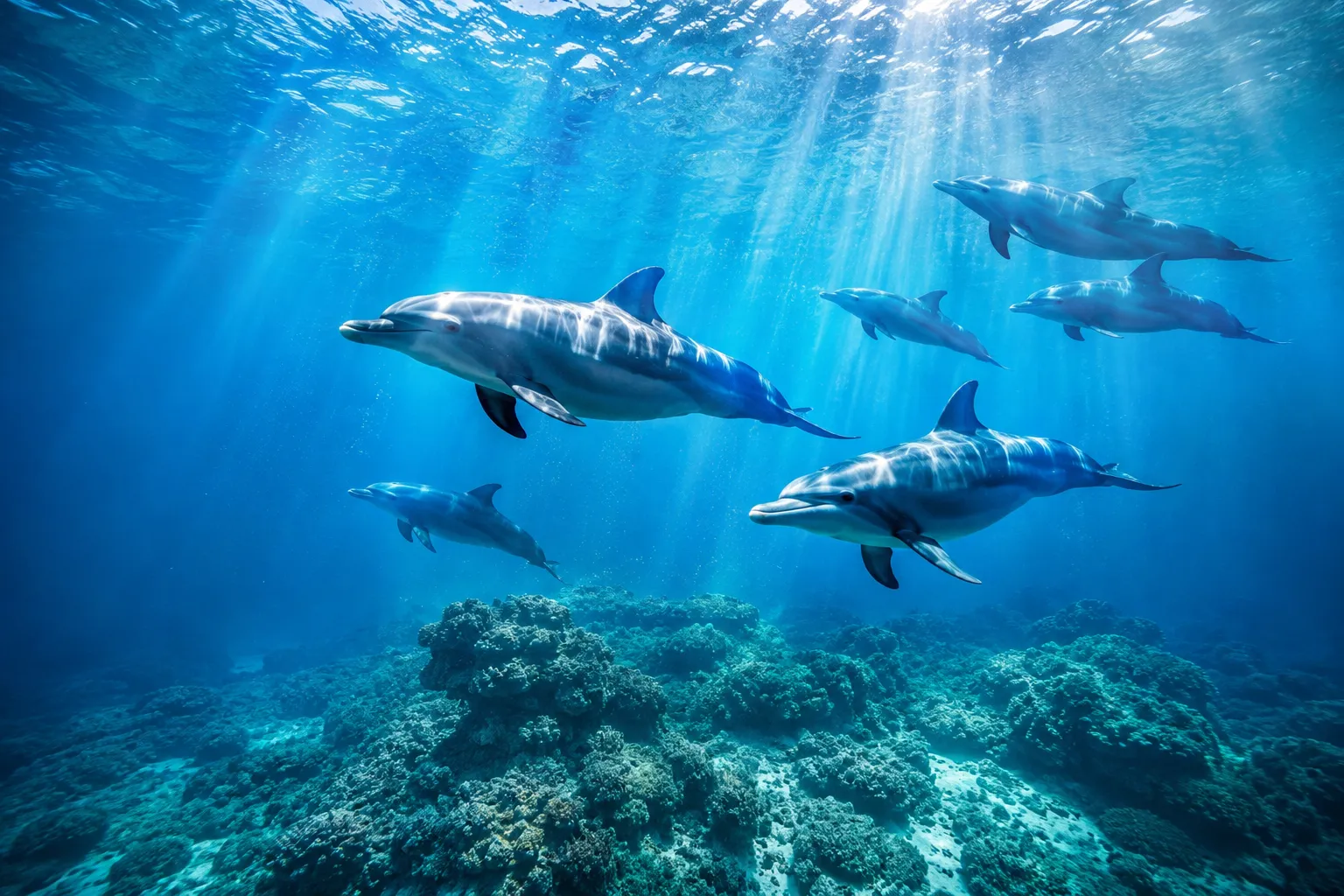
For certified divers, the Giftun reefs are among the most reliable near Hurghada, with coral walls, gentle drifts and sheltered sites suited to everyone from fresh open-water divers to old hands. A Red Sea diving tour here trades the sandbank crowds for the quiet of the deeper reef. If wild dolphins are on your list, the horseshoe reef of the wider marine park makes a Dolphin House trip a natural companion to a Giftun day.
Mahmya beach: the slower Giftun day
Mahmya deserves its own mention because it is the antidote to the busy sandbanks. Set on the sheltered side of Big Giftun and run as a low-density beach concession, it caps its numbers, keeps a stretch of soft sand and shallow reef to itself, and feels closer to a relaxed island club than a day-tripper stop. There is shade, a proper lunch, and reef a short swim from the loungers. It suits couples and anyone who wants the Giftun water without the Giftun scrum, and it pairs beautifully with a morning snorkel elsewhere in the reserve.
Mahmya also tends to run a little later and a little calmer than the sandbank trips, with a smaller boat and a sit-down lunch rather than a buffet queue. If your idea of a Giftun day is a long, slow afternoon with reef at your feet rather than a race for the best patch of sand, this is the one to book. It is the version of the island many locals choose when they take a day off, and it rarely disappoints them.
If you have one day and want it calm, choose Mahmya or a private boat over the largest shared sandbank trips. You trade a little of the postcard drama for room to breathe, cleaner water underfoot and a lunch worth sitting down for.
When to go and how to beat the crowds
Giftun is a year-round destination. Spring and autumn bring warm, comfortable days and pleasant sea temperatures, summer is hot but perfect for the water, and winter stays mild and noticeably quieter. The bigger lever, though, is the time of day, not the time of year. The water is calmest and clearest in the early morning, before the wind picks up and before the fleet arrives. A boat that reaches the sandbank by mid-morning gives you an hour of near-empty turquoise that the midday crowds never see. For the seasonal detail, our guide to the best time to visit Hurghada goes deeper.
Wind is the other variable worth watching. A brisk northerly can churn the shallows and cut the visibility, and on the windiest days a sheltered site on the lee of Big Giftun beats an exposed sandbank. A good captain reads this on the morning and adjusts course, which is the quiet advantage of a small, local boat over a fixed shared itinerary that sails the same route regardless of the sea. If the forecast is poor, it is often better to swap the day than to push through a rough crossing.
Book a boat that departs by 8:30am. You reach the reserve ahead of the day-boats, catch the brightest water for photographs, and claim your shade before the rush. By the time the fleet arrives, you are already in the sea.
The rules that protect the reef
The reason Giftun still looks the way the photographs promise is that it is protected, and a handful of simple rules keep it that way. Follow them and you leave the reef exactly as you found it for the next boat.
- Do not touch, stand on or break the coral. It is a living animal, and a single footstep can undo decades of growth.
- Do not feed the fish or the gulls. It changes their behaviour and unbalances the reef.
- Wear reef-safe sunscreen, or cover up with a rash vest instead of coating the water in chemicals.
- Take nothing: no shells, no coral fragments, no starfish out of the water for a photograph.
- Carry your rubbish back to the boat. The park has no bins, and the current carries litter onto the reef.
- Let the crew use the mooring buoys. Anchors dropped on coral do lasting, invisible damage.
What a day at Giftun looks like
A well-run Giftun day has a rhythm. You board at the marina in the cool of the morning and clear the harbour as the light is still soft. The first stop is usually a reef, dropped in before the crowds so the water is glassy and the fish are active. From there you move to a sandbank or a beach for the long middle of the day: lunch in the shade, a swim in the shallows, a slow hour doing nothing beautifully. A second snorkel in the afternoon, then the run home with the sun behind you and salt drying on your skin. Facilities are simple. Expect shade, loungers and a lunch on the better trips, basic toilets at the managed beaches, and very little else. That plainness is the point. You came for the sea, not the amenities.
Who each part of Giftun suits
Orange Bay is for the postcard: the glowing sandbank, the photographs, the classic Red Sea day, best done early and small. Paradise Island suits quiet snorkelers who want reef over spectacle. Mahmya is for couples and anyone chasing calm, a proper lunch and room on the sand. The open reef sites are for divers and confident swimmers who would rather hang over a coral wall than lie on it. And a private boat suits families, groups and anyone who wants to set their own pace, moving between all of the above without a timetable. If you are still shaping the wider trip, our roundup of the best things to do in Hurghada puts Giftun in context.
Families do especially well here, provided you plan around the water. The shallow sandbanks are safe for paddling and for building the confidence of nervous young swimmers, life jackets are standard on the boats, and a glass-bottom hull turns the crossing into the day's first wildlife show. Older children take to a mask quickly in water this warm and clear. The only firm rule is shade and sunscreen, because the sun reflected off pale sand and open sea is stronger than it feels.
How Solara does Giftun
We live and work on this coast, and we plan Giftun the way we would for family. That means an early, unhurried departure, a boat sized to your group rather than to a marketplace, a captain who knows which reef is calmest on the day, and the park fee handled so nothing interrupts the morning. We time the crossing to the light, keep you ahead of the fleet, and set a table in the shade before you have finished your first swim. Browse the full Solara Journal for more of the coast, or tell us how you like to spend a day on the water and we will build the Giftun trip around it.
The reason to book a Giftun day through a house that lives on this coast, rather than the cheapest ticket in a marketplace, is not luxury for its own sake. It is judgement: the call on which reef is calm today, the boat sized so you are not one of a hundred, the fee handled, the lunch that is actually worth sitting down for, and the timing that keeps you a step ahead of the fleet all day. The island is open to anyone with a ticket. The day is what you are really paying for.
Anyone can sell you a ticket to the island. The difference is the day around it: the boat on time, the reef chosen for the wind, the fee already paid, the shade already waiting.Solara concierge