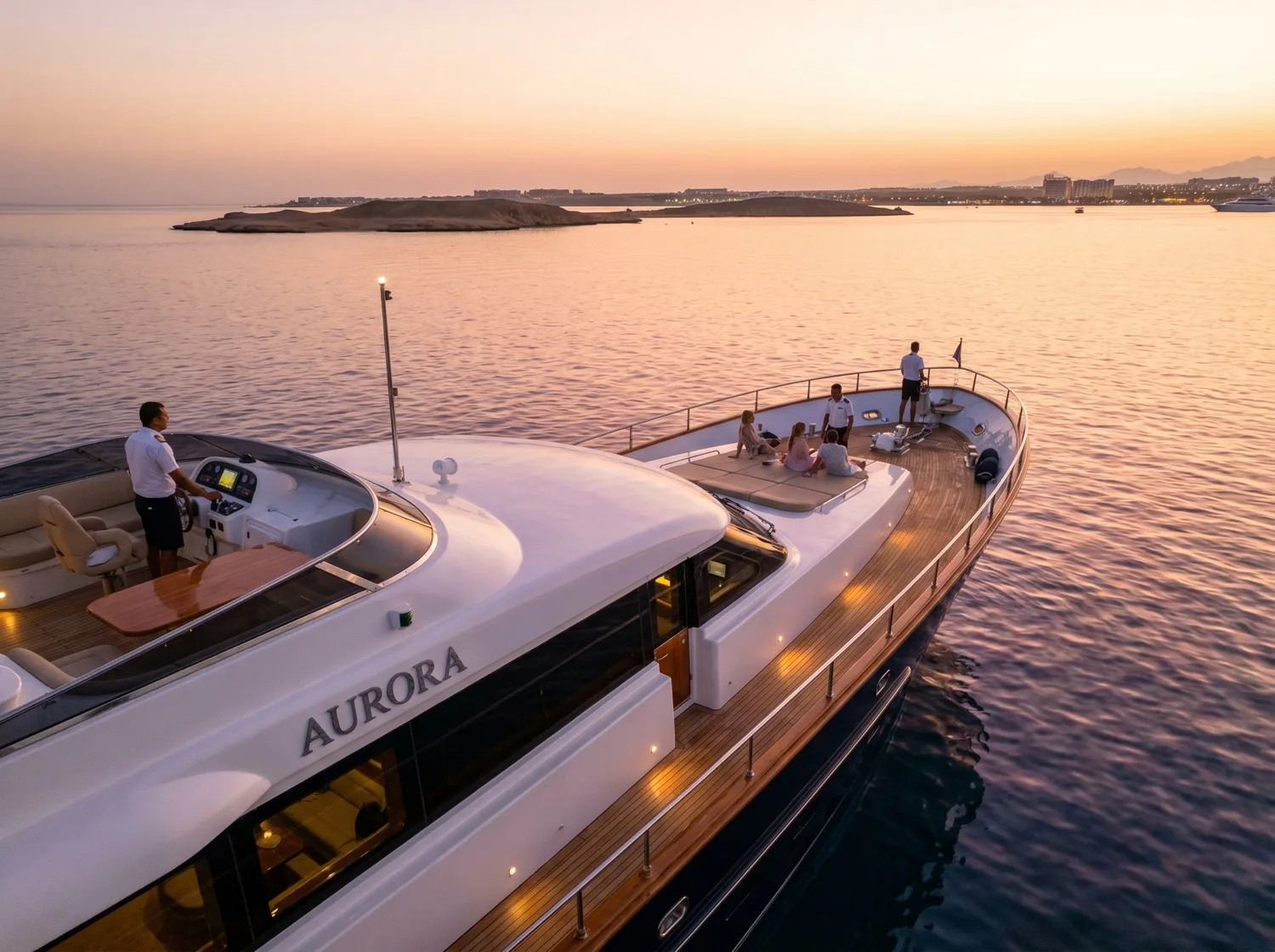
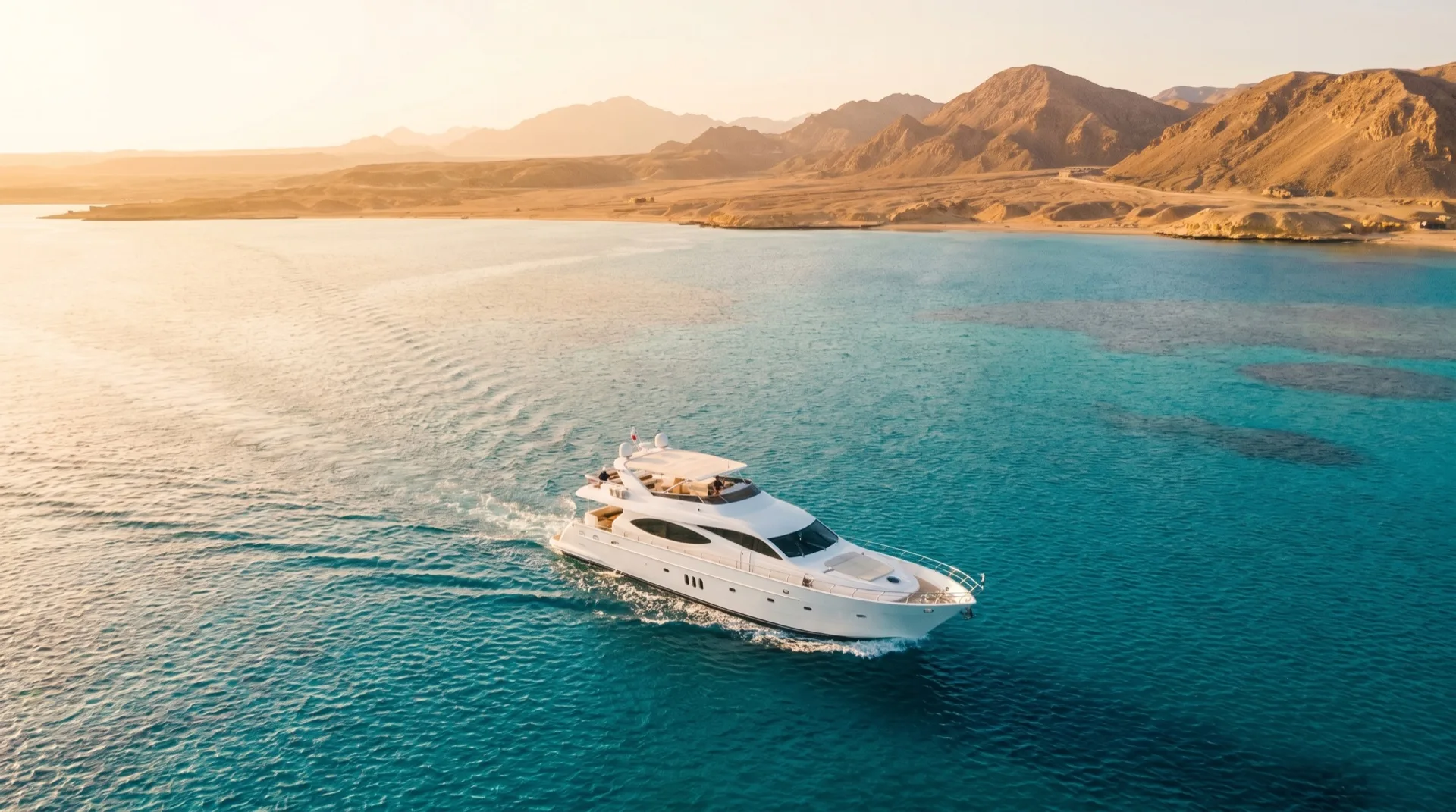
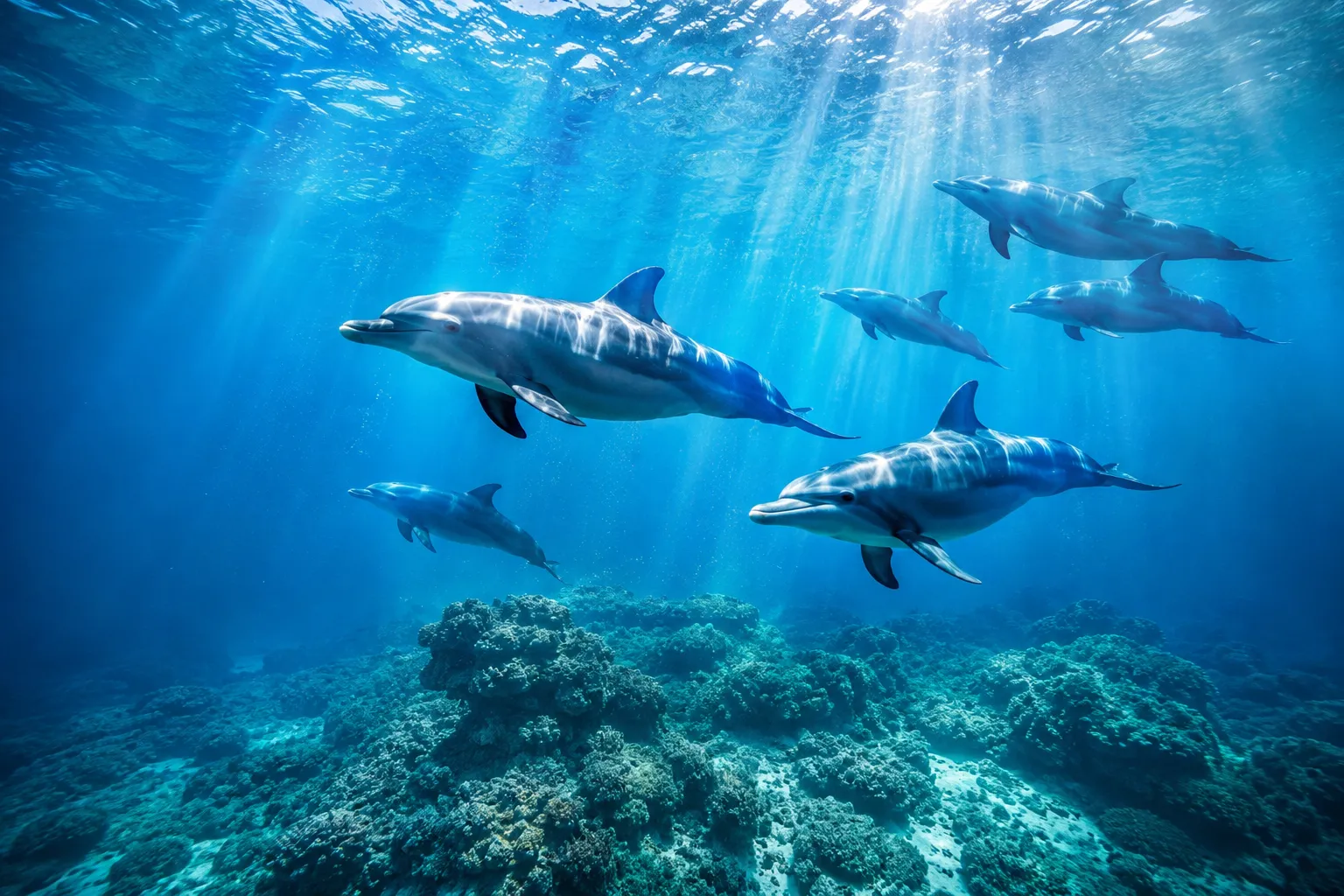
The best time to visit Hurghada is spring, March to May, and autumn, September to November, for warm days and comfortable sea temperatures. Summer, June to August, is hot on land but has the warmest water of the year and suits anyone who wants to spend the day in the sea. Winter, December to February, is mild, quiet and the best value, with cooler evenings and water warm enough for a short snorkel. In short, Hurghada works all year; the season only changes how you plan your days.
The best time to visit Hurghada, in one line
If you want a single answer: aim for late March to early June, or late September to mid November. In those windows the air sits in the high twenties to low thirties Celsius, the sea holds around 24-27C, rain is close to nonexistent, and the beach clubs are busy without being overrun. The rest of the year has its own case to make, which is why so many people come back in a different season and find a different Hurghada waiting. Below is the honest, month-by-month version, written by people who dive, sail and drive this coast every week.
- Best overall: March to May and September to November. Warm dry days, a comfortable sea, and crowds you can plan around.
- Best for the water: June to August. Hot on land, often 38-40C, but the warmest sea of the year and long, bright days.
- Quietest and mildest: December to February. Days near 22C, cooler nights, and a wetsuit welcome in the water.
- Best value: the shoulder weeks of late spring and late autumn, plus most of low-season winter outside the holidays.
- Windiest: roughly May to September, the prime months for kitesurfing on the flats.
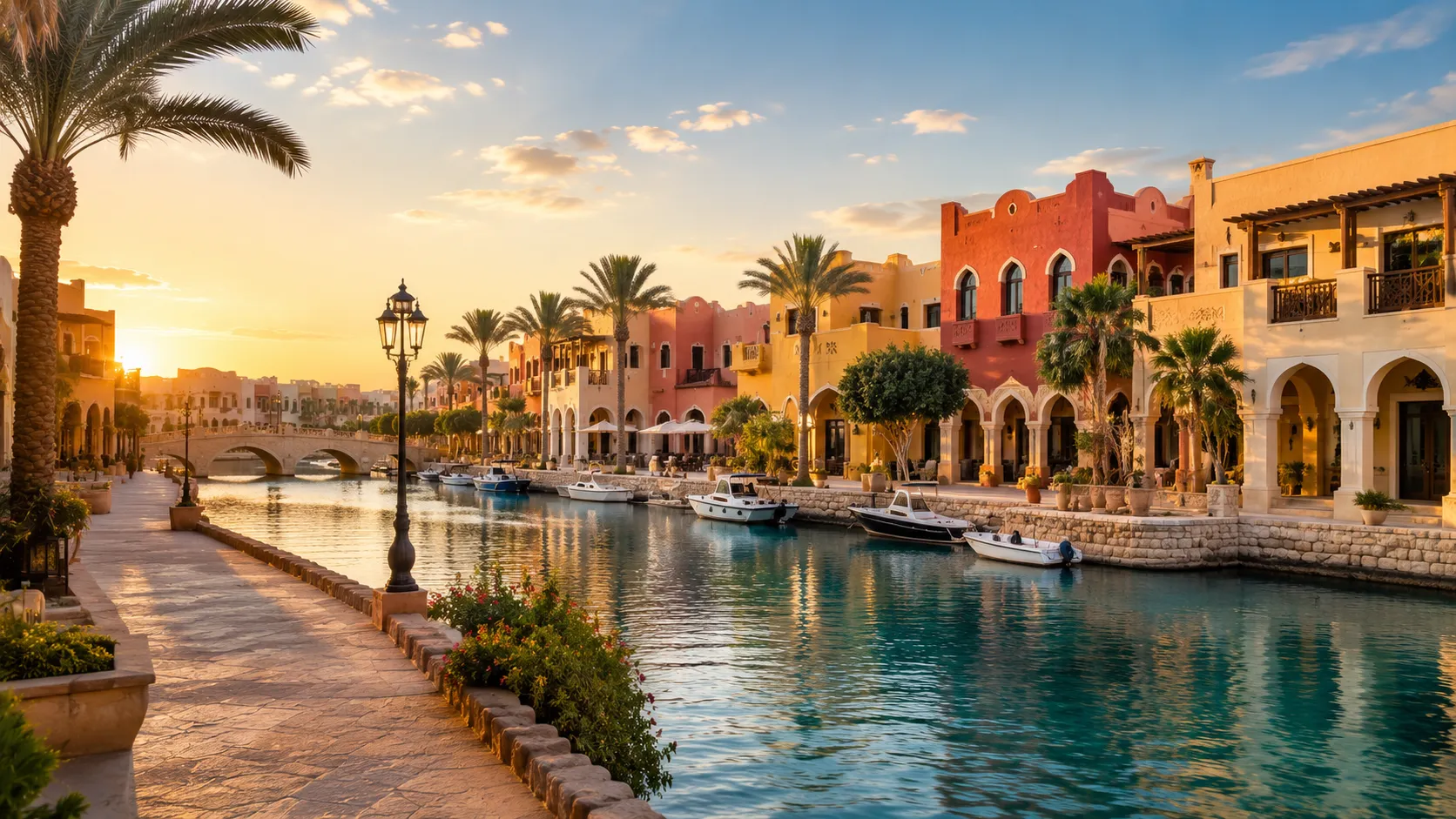
Why Hurghada is a year-round destination
Hurghada sits on the Red Sea coast in one of the driest, sunniest corners of Egypt. The city sees sun on the great majority of days, rainfall is measured in a handful of millimetres a year, and the sea never turns cold in the way a European coast does. That combination, reliable sun, warm salt water and desert dryness, is what lets the season run twelve months long. What changes is not whether you can enjoy the water, but how the air feels on land, how warm the sea is when you first get in, and how many other people share the sandbank with you.
So the question is less about avoiding a bad season and more about matching the month to the kind of trip you want. A family with young children wants different weather than a diver chasing the warmest, clearest water, or a couple looking for a quiet, well-priced week in the low season. Our complete Hurghada travel guide covers the wider logistics; this piece is only about timing.
People ask what the season is here. The honest answer is that there is always a season for something. The trick is knowing which month rewards which kind of day.Field notes · The Solara Journal
Spring in Hurghada: March, April and May
Spring is, for most travellers, the sweet spot. In March the air climbs from the mid-twenties Celsius into the high twenties by month's end, with dry, bright days and evenings cool enough for a light layer. April is close to ideal: highs around 28-29C, long sunny days, and a sea warming through 23-24C. By May the land is genuinely hot, often 32-33C at midday, and the water has climbed to a comfortable 25-26C that most people happily swim in without a wetsuit.
Crowds build through spring toward the European Easter break, then ease again into May. This is prime time for the islands and the reef, when the water is clear, the light is generous and a full day at sea is a pleasure rather than an endurance test. If you are shortlisting what to actually do with these days, our guide to the best things to do in Hurghada is the place to start.
Late April into the first half of May is our favourite window of the whole year: hot enough for the sea to feel warm, before the peak-summer heat and the strongest afternoon winds arrive.
Summer in Hurghada: June, July and August, and the 40C question
Summer is when Hurghada gets hot in earnest. June runs around 35C, July pushes 37-38C, and August frequently touches 40C or a little above at midday. The heat here is dry, not humid, which makes it more bearable than the same number would feel in a tropical climate, but 40C is still 40C. The upside is the sea: this is when the water is at its warmest, roughly 28-30C, warm enough that you never hesitate before getting in and can stay for hours.
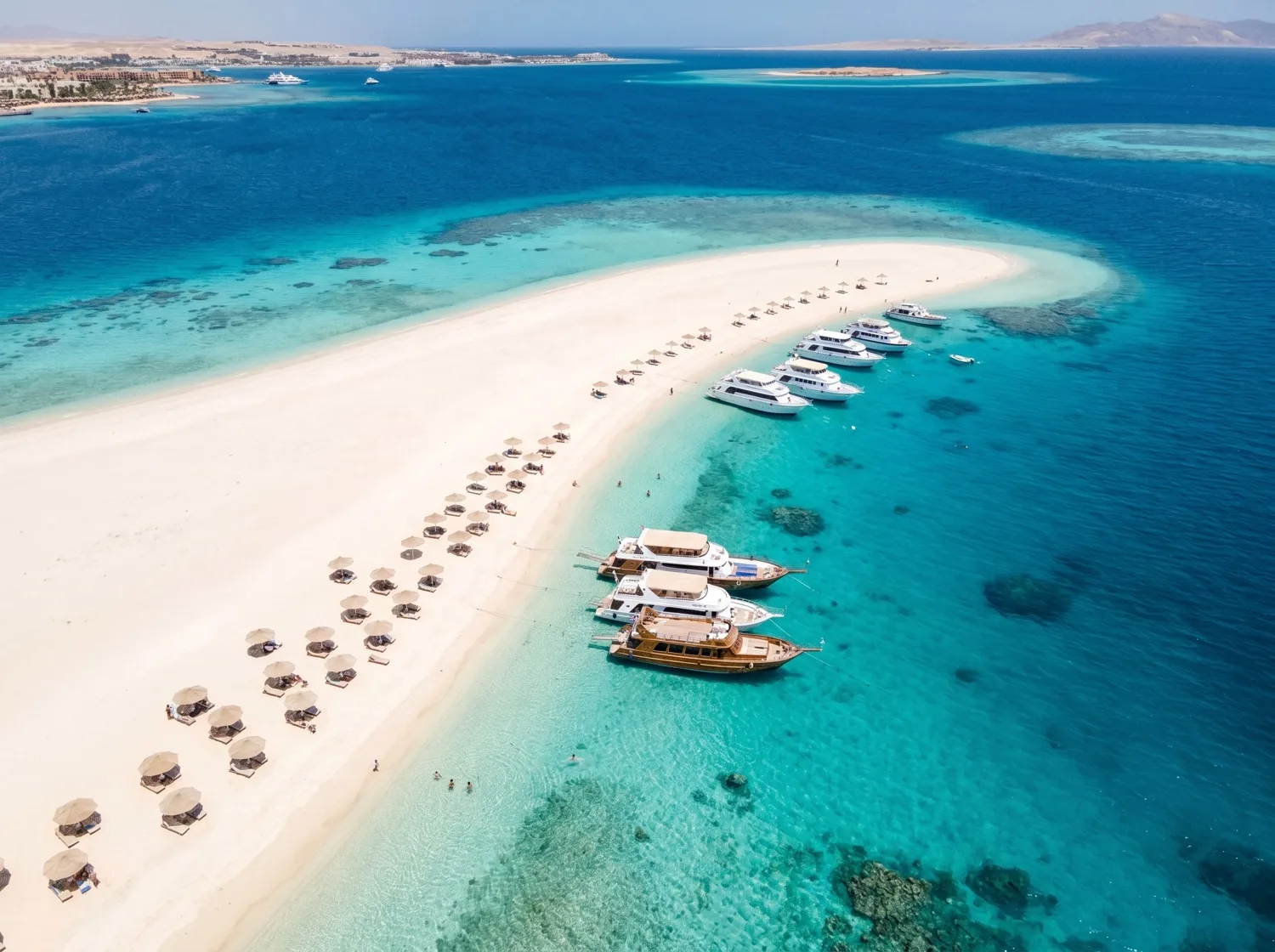
The way to enjoy a Hurghada summer is to plan the day around the sun rather than fight it. Start early, be on a boat or in the water by mid-morning, take the hottest hours in the shade or a pool, and come back out as the afternoon softens. Almost every worthwhile day trip, whether a boat to Orange Bay Island or an early reef dive, is built to leave before the heat peaks for exactly this reason.
In July and August, drink far more water than you think you need, wear a hat and a real sun shirt in the water, and treat 11am to 3pm as pool-and-shade time. A day that starts at 8am and ends with a swim at sunset beats one that fights the midday heat.
Summer also brings the school-holiday crowds and higher prices in the peak weeks, though the extreme heat keeps some travellers away and can make the early mornings feel surprisingly uncrowded. If you handle heat well and want the warmest possible sea, summer is genuinely rewarding. If you wilt above 35C, lean toward spring or autumn instead.
Autumn in Hurghada: September, October and November
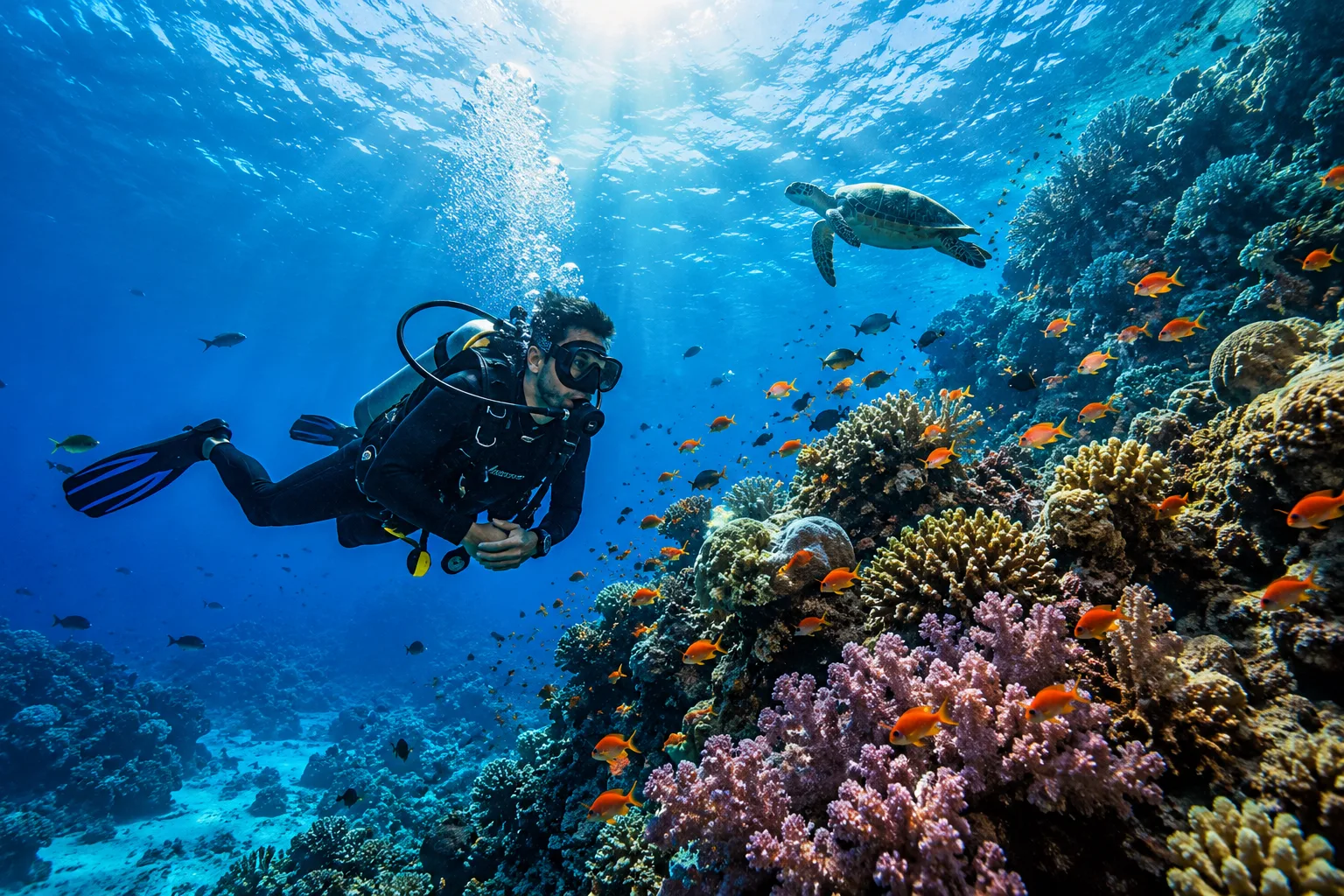
Autumn is the mirror of spring, and for many divers it is the single best stretch of the year. September is still hot, around 34-35C, but easing, while the sea holds onto all its summer warmth at roughly 28-29C. October is close to perfect: comfortable days near 30-31C, calm bright conditions, and water still around 26-28C. November cools noticeably, with days settling into the mid-twenties and the sea slipping toward 24-25C, the point at which some snorkelers reach for a thin wetsuit.
What makes autumn special is the pairing of warm water with softening air and easier winds. The sea is at its most inviting just as the land becomes comfortable again, and the peak-summer crowds have thinned. For diving and snorkeling in particular, late September and October are hard to beat. It is also a fine time for the desert, when the evenings cool enough to enjoy a fire without the summer's lingering heat.
Winter in Hurghada: December, January and February
Winter is Hurghada's quiet, mild, best-value season, and it is far better than its reputation among people who have never tried it. Daytime highs sit around 21-23C, the sun still shines on most days, and rain remains rare. The difference is felt at the two ends of the day: mornings and evenings turn genuinely cool, into the low teens Celsius, so you will want a jacket after dark. The sea cools too, to roughly 21-23C, which is swimmable but brisk on entry. A wetsuit turns a short shivery snorkel into a comfortable hour.
Winter is the season for people who care more about calm, space and price than about a bathwater sea. The beaches are uncrowded, the light is beautiful, and this is prime time for land-based days: the desert, the city, and the long inland day trips to Luxor or Cairo, where the winter cool is a blessing among the monuments. The Christmas and New Year fortnight is the one exception, briefly busy and priced like high season, before the coast empties again into January.
Outside the Christmas and New Year peak, January and early February are among the cheapest weeks of the year for flights and hotels, with the same reliable winter sun. Pack a wetsuit, or hire one, and the cooler sea stops being a problem.
Sea temperature in Hurghada, month by month
The sea is the reason most people come, so it is worth knowing how warm it actually is through the year. These are approximate ranges for the water around Hurghada; the exact figure varies year to year and with the wind, but the shape of the curve is reliable. Anything from about 25C upward feels warm to most swimmers; below roughly 24C, many snorkelers are happier in a thin wetsuit for a longer session.
- January: approximately 21-22C, cool on entry, a wetsuit helps.
- February: approximately 20-22C, the coolest water of the year.
- March: approximately 21-23C, warming slowly.
- April: approximately 22-24C, comfortable in the sun.
- May: approximately 25-26C, warm for most swimmers.
- June: approximately 26-27C, warm and inviting.
- July: approximately 28-29C, very warm.
- August: approximately 29-30C, the warmest sea of the year.
- September: approximately 28-29C, still holding summer warmth.
- October: approximately 26-28C, warm and calm.
- November: approximately 24-25C, cooling, still swimmable.
- December: approximately 22-23C, mild, a wetsuit welcome.
The best time for snorkeling and diving
For time in the water, the two golden stretches are late spring, roughly May and early June, and autumn, September and October. In those windows the sea is warm, around 26-29C, visibility is excellent, and the winds are usually gentle enough for a calm, clear surface. Summer offers the warmest water of all but the strongest afternoon winds, so morning boats are the answer. Winter diving is still very good, the marine life does not go anywhere, but the cooler 21-23C water makes a wetsuit essential rather than optional.
As a rule of thumb on wetsuits: from about May to November most people are comfortable in a shorty or a 3mm suit, or in nothing more than a rash vest at the height of summer. From December to April a 3mm to 5mm suit makes a real difference, especially on a longer dive or a second dive of the day. Certified divers who want the warmest, clearest conditions should target September and October; snorkelers and first-timers will find late spring just as kind. When you have picked your window, a Red Sea diving tour can be timed to the calmest water of the day.
The best time to visit Hurghada with a family
For families, the sweet spot is spring and early autumn, when the sea is warm enough for children to stay in for hours and the air is not punishingly hot. April, May, late September and October give you comfortable days, a warm forgiving sea, and long light for early starts and calm afternoons. High summer works too if your children love the water and you are disciplined about shade, hats and hydration, but the 38-40C midday heat is a lot for small children to spend outside.
Winter suits families who prefer quiet beaches and gentle days over a warm sea, provided you pack for cooler evenings and do not mind a brisker swim. Whatever the month, the same rule holds: plan one main activity a day, keep the middle of the day flexible, and leave room to do nothing by the pool. For age-by-age ideas, see our guide to family things to do in Hurghada.
Travelling with children in summer, choose a hotel with a shaded pool and book any boat trip for the earliest departure. A 7:30am to 8:30am start means calm water, cool air and the sandbank to yourselves before the heat and the crowds arrive together.
The cheapest and best-value months
Prices in Hurghada follow the calendar closely. The peaks are the European holiday weeks: Christmas and New Year, Easter, and the summer school break, when flights and hotels are at their highest and the popular boats fill first. The best value sits in the low season and the shoulder weeks around it. January and early February, outside the Christmas fortnight, are consistently the cheapest, with reliable winter sun and near-empty beaches. Late spring after Easter, and mid to late autumn once the summer crowds have gone, offer the rare combination of excellent weather and softer prices.
If your priority is value with a warm sea, target the last two weeks of May or the first three weeks of November. You get comfortable days, a swimmable sea and thinner crowds, without the peak-season premium. If your priority is the lowest possible price and you do not mind a cooler swim, aim for January. Either way, booking the boats and day trips a few days ahead in high season, rather than on the day, keeps the best departures open to you.
Wind and the kitesurfing season
Wind is part of the Red Sea's character and a genuine factor in when to visit. The prevailing northerly breeze is strongest and steadiest from roughly May to September, which is exactly why Hurghada and the flats around El Gouna are among the world's better kitesurfing and windsurfing destinations. For kiters, that summer window is the season, with dependable afternoon wind and warm water. For everyone else, the same wind is the reason boats and dives are best taken in the calmer morning, before the breeze builds after midday.
Autumn and spring bring lighter, more variable winds, and winter can serve up the flattest, calmest sea of all on its still days, though a cold windy day in January feels cooler than the temperature suggests. If a boat day is the centrepiece of your trip, plan it for the morning in any season, and keep a flexible spare day so a windy afternoon does not cost you the experience entirely.
Time these to the season

How Ramadan and public holidays affect a trip
Ramadan, the Islamic holy month of daytime fasting, shifts through the calendar by roughly eleven days each year, so its dates move earlier over time. Hurghada is a resort city built for international visitors, so tourist life continues largely as normal: hotels serve food all day, beach clubs and boats run, and the excursions go ahead. What changes is the rhythm of the day. Some smaller local restaurants and shops keep shorter or later hours, the pace is gentler by day, and the city comes alive after sunset when the fast is broken. It can be a quieter, atmospheric time to visit, and often a well-priced one.
Egyptian public holidays, and the Eid festivals that bookend and follow Ramadan, are the domestic peak, when Egyptian families travel and the busiest sites and boats fill up. Around those dates, book your day trips and any inland tours to Luxor or Cairo a little further ahead. None of this is a reason to avoid a particular month; it is simply worth knowing so the timing does not surprise you.
Jellyfish, weather and other seasonal notes
A few practical notes round out the picture. Jellyfish are uncommon on this coast and are not a fixed season, but occasional blooms can drift through, most often in the warm late-summer and early-autumn water. They pass quickly, local crews know the spots to avoid on a given day, and a rash vest is sensible protection in any month. Rain is genuinely rare year-round; on the handful of days it does fall it is usually a brief shower rather than a washout, most likely in the winter months.
The two things worth watching in any season are wind and sun. Wind decides how calm your boat day is, which is why mornings win; sun is strong all year, so high-factor sunscreen, a hat and shade matter as much in March as in August. On safety more broadly, Hurghada is a well-run resort city geared to visitors, and our honest assessment is in is Hurghada safe.
Weather here rarely cancels a plan. It just tells you which half of the day to use. We build the itinerary around that, not against it.Solara concierge
How Solara plans your trip around the season
The real value of knowing the season is not in choosing one perfect month; it is in shaping each day to the conditions you actually have. In summer that means early boats and shaded afternoons. In winter it means warm land days, a wetsuit for the water and long inland trips while the coast is quiet. In spring and autumn it means simply making the most of a coast that is behaving beautifully. We live here, we watch the wind and the water daily, and we time each departure to the best part of the day rather than the fullest.
Whatever month you land in, the ingredients are the same: a warm sea, generous sun and a desert an hour from the water. If you would like us to build the days around the season you are travelling in, browse the full Solara Journal for more local guides, or tell us your dates and we will plan the trip so the weather works for you, not the other way around. A desert night, in particular, changes character with the season, and a desert safari timed to the right evening is one of the best hours you will spend here.